Even a small detail overlooked can lead to significant consequences:
- Unsafe working conditions upon returning to work
- Affects components, materials, or equipment
- Increased risk of displacement, tilting, collapse, or collision
- Incurs remedial costs after the holiday
- Delays progress when the construction site resumes operations
Why do steel items need a thorough review before the holiday?
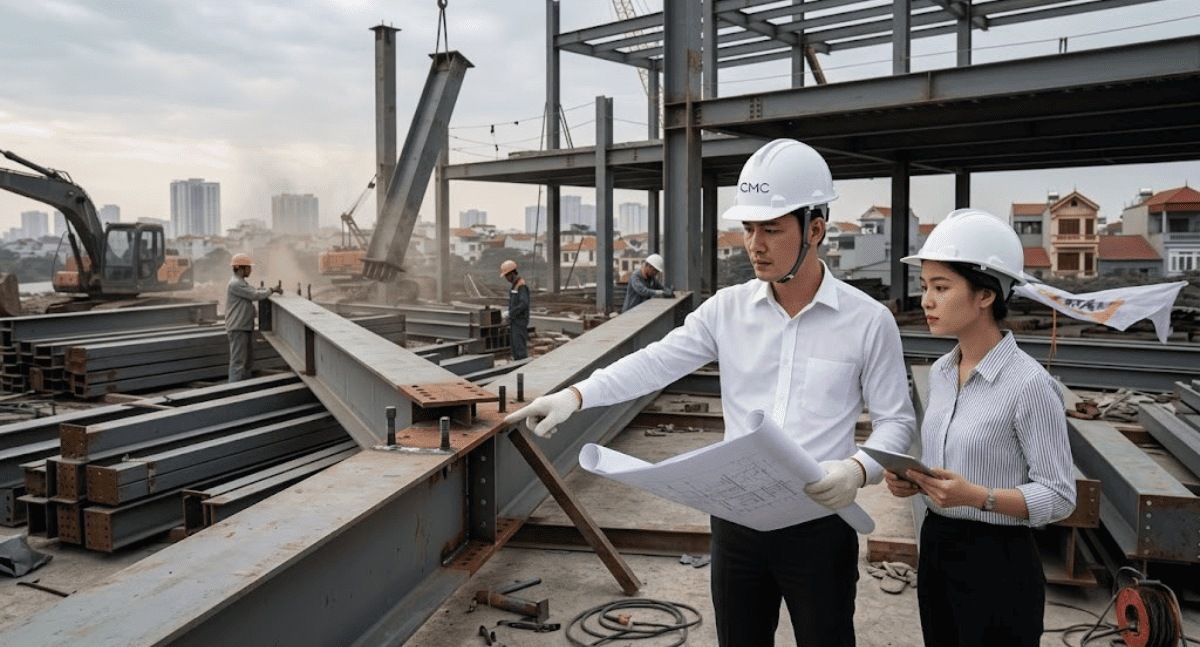
Compared to many other items, steel structures or components have their own unique characteristics:
- Often involves heavy loads
- Potential for changes in stability if not fully secured
- Easily affected by wind, vibration, mechanical impact, or weather
- Many components are in an unfinished state of construction, with incomplete final connections
- Steel materials, if stored improperly, may shift, fall, or deteriorate
1. Check the stability of the steel components that are being erected
- Has the structure been securely anchored?
- Has temporary bracing or appropriate support been provided?
- Is there a risk of shaking, tilting, or rotating in strong winds?
- Is the current state safe to leave undisturbed for several days?
Many incidents don't stem from major faults, but rather from a component that seems "reasonably stable" during the workday but isn't stable enough to withstand several days of unchecked operation
2. Inspect all bolts, joints, and temporary connections
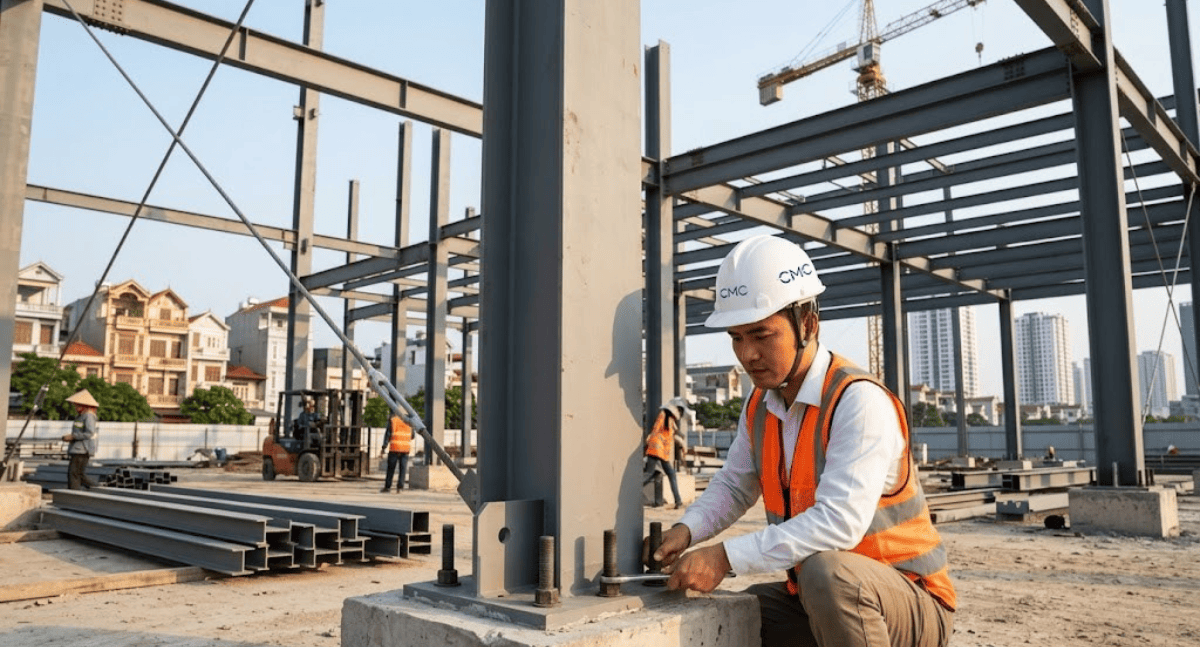
- Are the bolts tightened correctly?
- Are the temporary connections still secure?
- Are there any newly installed parts that are not fully locked?
- Are the mounting plates, connecting brackets, or tie rods in a loose or disconnected state?
3. Inspect temporary bracing, temporary supports, and auxiliary stabilization measures
- Is the temporary bracing loose?
- Are the kickstands properly positioned?
- Are the support points stable?
- Are there any signs of slipping, misalignment, or imbalance?
- Is the current temporary measure still appropriate if left for several days?
This is an area that shouldn't be checked lightly. Many problems stem from the fact that the auxiliary stabilization solution is no longer reliable before the construction is complete
4. Control of steel materials in storage and steel not yet installed
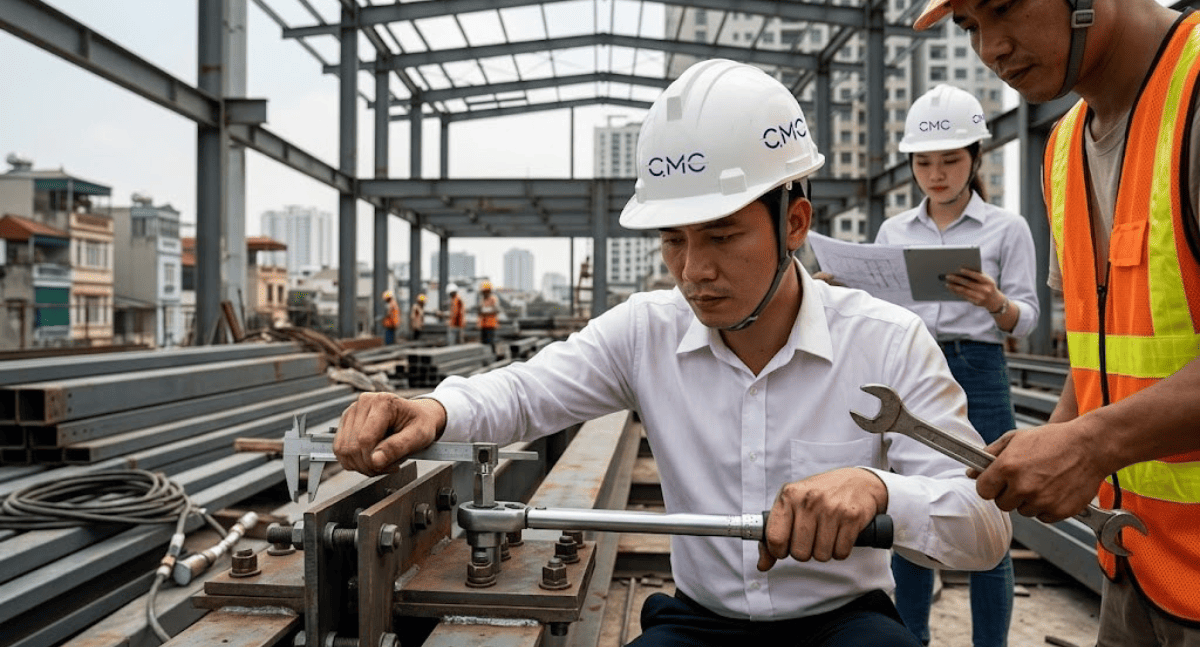
- to roll, slide, or fall
- to collide with another area
- to block walkways or emergency exits
- to create a hazard when the construction site resumes work
Before your vacation, make sure that:
- Steel materials are supported, braced, and securely fastened.
- Do not stack them too high or unbalanced.
- Do not place them near floor edges, pit edges, or areas where they are at risk of falling.
- Storage areas must be labeled and fenced if necessary.
A tidy and organized materials yard before a holiday not only enhances safety but also allows the construction site to restart more quickly afterward
5. Inspect the area for cranes, lifting equipment, and other equipment supporting steel construction
- Have cables, slings, turnbuckles, shackles, and lifting hooks been collected in the correct place?
- Have lifting equipment been lowered to a safe position?
- Are lifting accessories left in a position where they could fall or be damaged?
- Are temporary support devices in a stable condition?
If these items are left scattered or in an unsafe condition, they will increase the risk to the construction site when there is no constant supervision.
6. Assess the potential impact of wind, rain, and weather during the holiday period
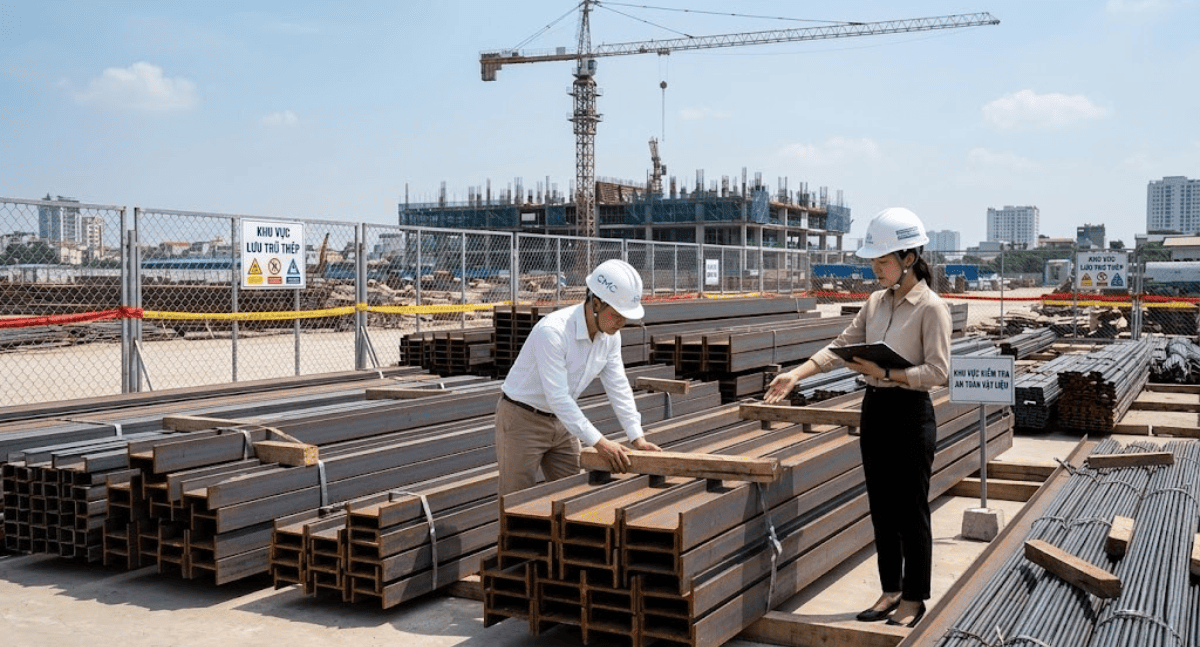
- If there is heavy rain, which areas will be affected?
- If there are strong winds, which structural elements are at high risk?
- Will the steel materials be displaced by the wind?
- Could the coverings, tarpaulins, or lightweight materials around the structure collide with the steel structure?
An unfinished steel structure is highly sensitive to environmental factors. Therefore, before a holiday, don't just inspect it under sunny conditions. Inspect it under the worst-case weather scenario as well.
7. Inspect floor edges, openings, work platforms, and elevated work areas involving steel
Steelwork is often associated with elevated work areas, temporary work platforms, access points, and hazardous edges.
Before leaving, check the following:
- Are the temporary railings intact?
- Are the safety nets damaged or deteriorated?
- Have the openings been properly covered?
- Is the work platform stable?
- Are the access points locked, barricaded, or clearly marked?
The goal here is not only safety during the break, but also ensuring that when workers return, the work environment is free from potential hazards resulting from previous interruptions
8. Remove scrap metal, sharp objects, and hazardous debris
This is a point that is easily overlooked, but it directly affects construction site safety.
Scrap steel, cutting heads, steel plates, steel wire, bolt heads, sharp edges, or other leftover parts, if left scattered around, can:
- causing slips, tripping, and falls
- causing cuts and punctures during movement
- hindering site inspections or restarts
- creating the image of an uncontrolled construction site
Before the holiday, all scrap steel must be collected, sorted, and transported to a safe collection area.
A clean construction site is always a sign of a well-managed site.
9. Check signs, barriers, and hazard area boundaries
During downtime, not everyone who enters the construction site is directly aware of the condition of the unfinished steel work.
Therefore, hazardous areas need to be:
- Clear barriers
- Easily visible warning signs
- Restrict access if necessary
- Mark unsafe areas to avoid entering
This is especially important for:
- Areas where erection is incomplete
- Areas where steel materials are stacked
- Locations with a risk of falling objects
- Areas where temporary bracing is being maintained or structures are not yet complete
Don't assume that "everyone knows this area is dangerous." A safe construction site is one where the level of danger is clearly demonstrated through practical organization
10. Create a checklist for handover before leave and for the person responsible to check after leave
One final, but crucial, point: any review will be ineffective without clear accountability
Before your vacation, you should have:
- Safety checklist for steelwork only
- Confirm inspected points
- Note areas requiring special monitoring
- Assign a person or department responsible for re-inspection when site operations resume
This helps avoid a situation where, after a holiday, everyone returns but no one knows the condition of the premises that was handed over beforehand.
A short but thorough checklist is always much better than a subjective inspection.
Before a holiday, safety isn't about "getting checked," but about checking thoroughly enough
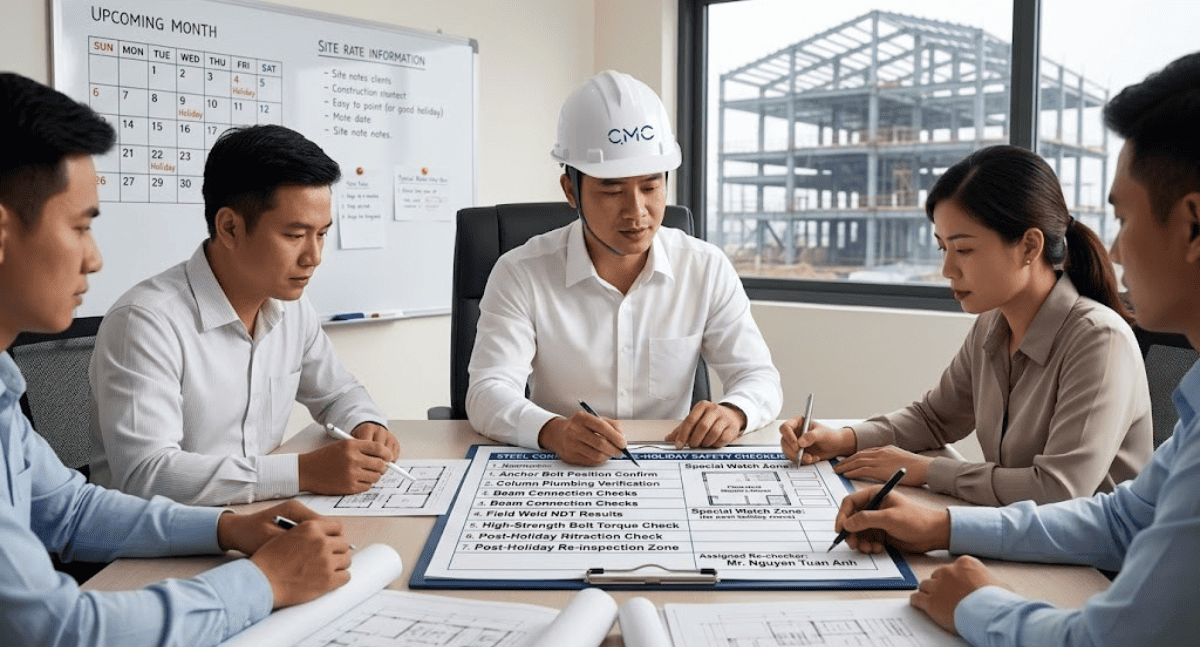
Many construction sites still conduct pre-break inspections, but the problem is that these inspections are too quick, too superficial, or fail to address the real risks.
For steelwork, the important thing isn't simply ticking off enough items. The important thing is to accurately identify potential safety hazards during the temporary shutdown.
At CMC Architects, site safety shouldn't be viewed as a separate task from progress or quality. On the contrary, safety is the foundation for maintaining progress and ensuring sustainable quality
A worry-free vacation begins with a properly inspected construction site
The vacation will be more fulfilling when the team can leave the site with the peace of mind that all critical items have been thoroughly inspected, especially high-risk areas like the steelwork.
These 10 inspection points aren't meant to make the work harder. They're a way to help the construction site:
- Safer during vacation
- Reduced risk of incidents
- Faster return to work after vacation
- Maintain a more stable deployment pace
Are you preparing for the holidays at the construction site?
Does your team have a separate safety checklist for the steelwork?
Are there any points in the 10 above that your construction site needs to tighten up before temporarily halting construction?
If you need a clearer, more practical, and easier-to-apply site review process for the pre-holiday phases, CMC Architects is ready to partner with you to build a safer, more rigorous, and more effective work process for your project.
- 📞 Hotline: 0936361299
- 📧 Email: cmc.vn1013@gmail.com
- 🌐 Website: https://cmcarchitects.com/
- 📍 Address: 79A Xuan La, Tay Ho, Hanoi