Many developers feel a little apprehensive when they hear about BIM.
"This is probably only for engineers and architects. If I'm not technically savvy, I won't understand anything."
But actually, that's a very common misconception
BIM is not just a tool for engineers. Essentially, BIM is a 3D model that integrates information, helping stakeholders visualize projects more easily, collaborate better, and detect problems earlier in the design phase. CMC Architects is also introducing BIM in this spirit: an intelligent 3D model that integrates technical data to enable stakeholders to easily visualize, analyze, and collaborate effectively from the outset.
In other words:
You don't need to be a structural engineer.
You don't need to use Revit.
You also don't need to know how to read complete technical drawings.
As a developer, you can still find BIM very effective as long as you know where to look.
So, in a BIM model, what are the five most important things that a developer should look for?
Why should developers consider BIM, even if they lack technical expertise?
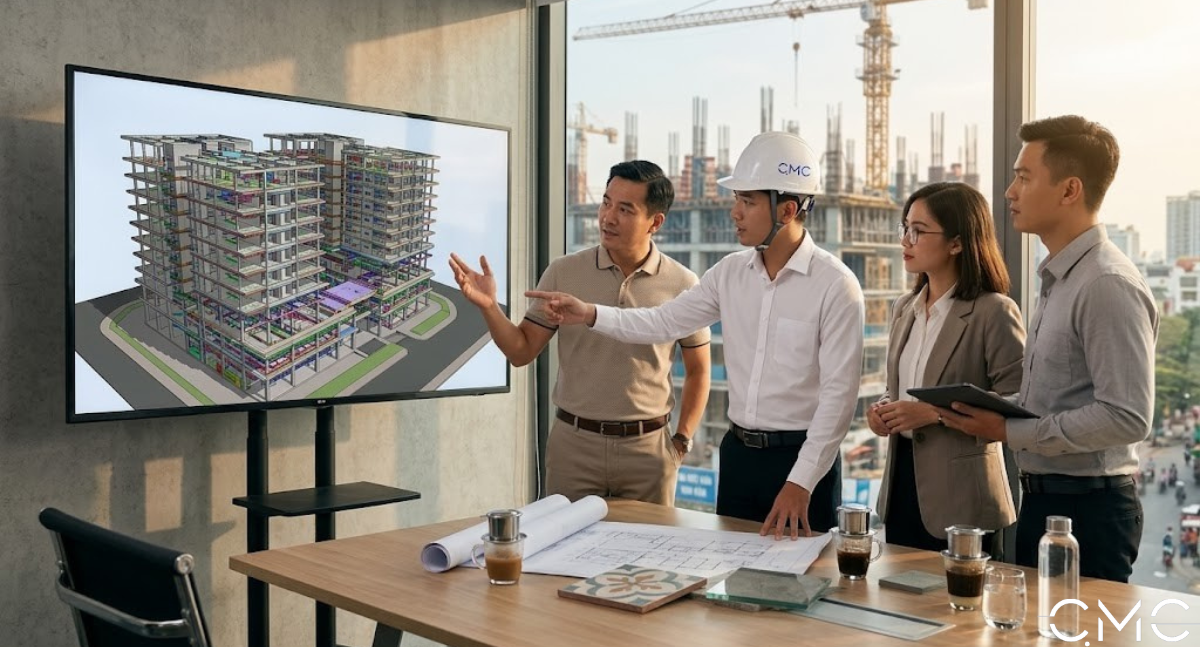
Because BIM helps you visualize a project in a much more intuitive way than 2D drawings
Instead of trying to visualize it from floor plans, elevations, sections, and a host of technical symbols, you can view the model as if you were seeing "the building being constructed right before your eyes," and then ask very practical questions:
CMC is also emphasizing that BIM helps synchronize architecture, interior design, and structure on a single 3D model, thereby reducing conflicts, saving costs, and optimizing construction. For investors, this is not just a technical benefit; it's a management benefit.
In short:
Viewing BIM isn't about replacing engineers. Viewing BIM is about making better decisions
1. Look at the overall space first, not the technical details
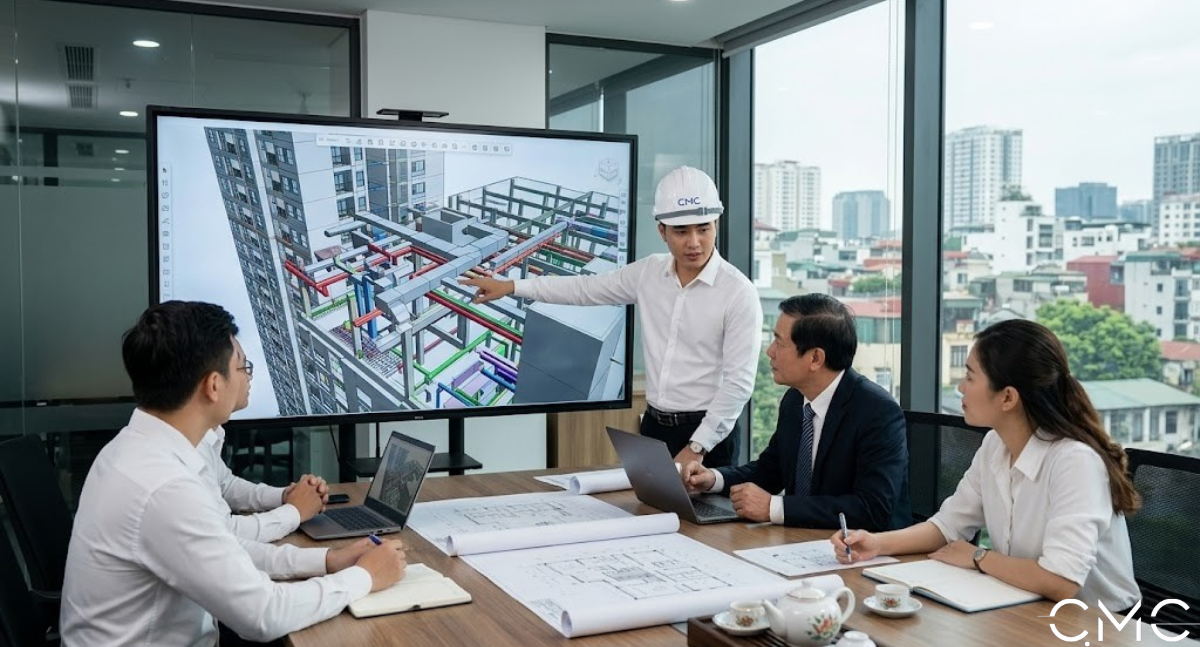
When opening a BIM model, many people tend to get drawn to the small details: beams, pipes, symbols, elevations, and structure
But if you're an investor, the first thing you should look at isn't those things.
The first thing to look for is:
2. Look at the intersections between the disciplines
This is an extremely important point
A beautiful model doesn't necessarily mean the construction will be smooth. The problem often doesn't lie in individual disciplines; it lies in how those disciplines interact
For example:
- The architecture is beautiful, but the technical systems get in the way.
- The interior layout is good, but the structure detracts from the user experience.
- The ceiling looks neat, but it feels cramped when MEP (Mechanical, Electrical, and Plumbing) is installed.
- Doors, walkways, technical boxes, suspension systems… start clashing.
CMC is emphasizing BIM as a tool to synchronize disciplines and detect conflicts early. This is also one of the biggest values of the model for investors: identifying risks before they become problems on the construction site
So when you're looking at a model, don't just ask "is it beautiful?"
Ask more:
"Is this intersection too crowded?"
3. Look at the user experience, not just the appearance
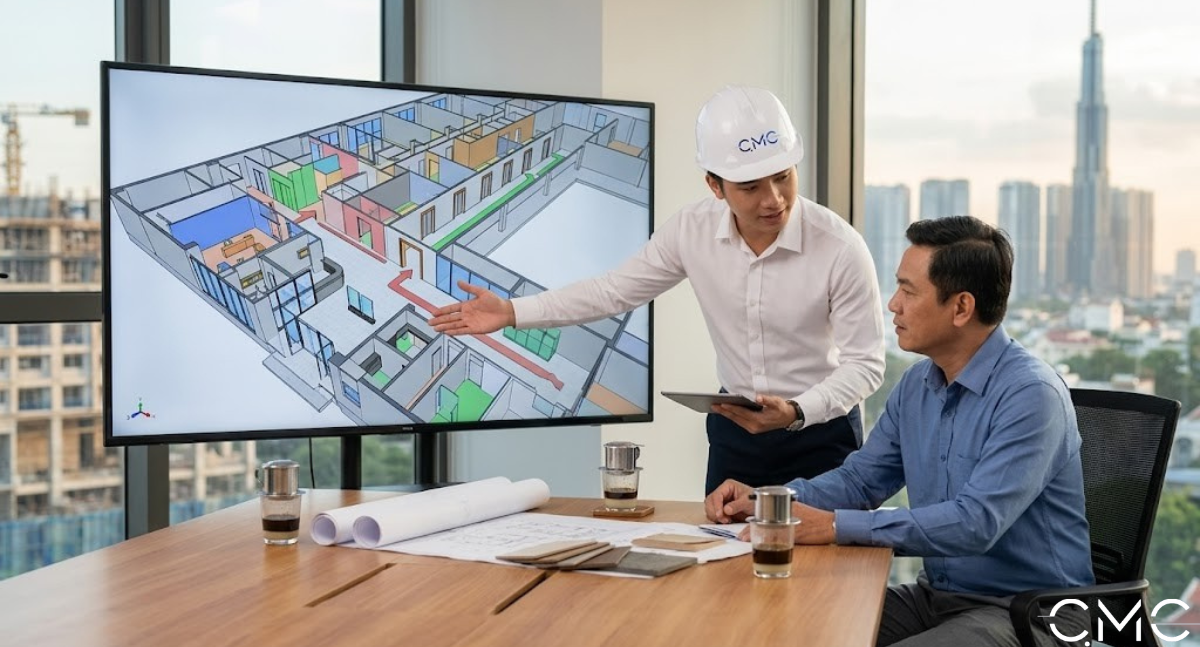
When viewing the model, try to put yourself in the shoes of a real person who will use the structure:
- How will pedestrians move around?
- Will the operators be able to operate the equipment conveniently?
- Is the door opening wide enough?
- Is the equipment easily accessible for maintenance?
- Are there any obstructions to visibility, exits, or operating space?
4. Look for areas where costs are likely to arise
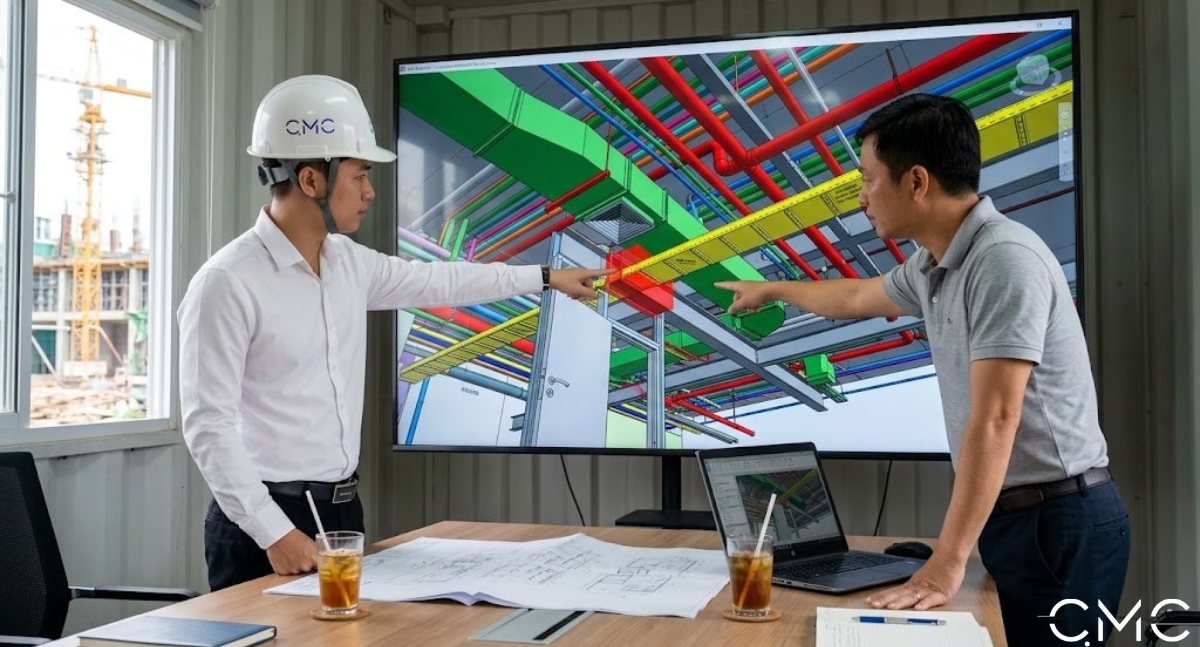
When viewing the model, pay attention to areas such as:
Complex intersections
- Areas with multiple overlapping systems
- Confined areas with many functions
- Locations where architecture, structure, and MEP must "avoid" each other
- Points that required multiple explanations from the team before understanding
This is often a potential breeding ground for problems.
You don't need to draw technical conclusions right away.
You just need to ask:
5. See if the model is helping you make decisions more easily
After viewing the model, you should see it more clearly:
- Which option is more reasonable?
- Which points need to be finalized early?
- Which areas should be repaired immediately?
- Which areas could affect the progress?
- What needs to be agreed upon between the parties before construction begins?
If, after watching the video, you still find everything unclear, the problem is most likely not that you "lack technical knowledge," but rather that the model is being presented or the information is being interpreted.
Therefore, when reviewing BIM, you have every right to request the following from the team:
- Remove unnecessary layers
- Focus on the area where you need to make a decision
- Present according to the client's questions
- Explain the model in terms of operations, costs, and timelines
BIM isn't meant to overwhelm viewers.
BIM is meant to help all parties understand each other more quickly.
5 questions developers should ask when reviewing BIM data
If you want a more effective model review session, save these 5 questions:
1. Does this space meet the desired function and user experience?
2. Where are the most sensitive intersections between different disciplines?
3. Which areas are most likely to cause problems if not addressed now?
4. Are there any decisions that need to be finalized soon to avoid late revisions?
5. What decisions do I need to make after viewing this model?
Just asking those five questions will make a huge difference to your BIM viewing session
The investor doesn't need to know all the technical details, just know how to spot the right spot.
Let's look at:
- Overall space
- Intersections between disciplines
- User experience
- Areas where costs are likely to arise
- Decision-making value provided by the model
That's all; you already understand BIM much better than many people.
Conclude
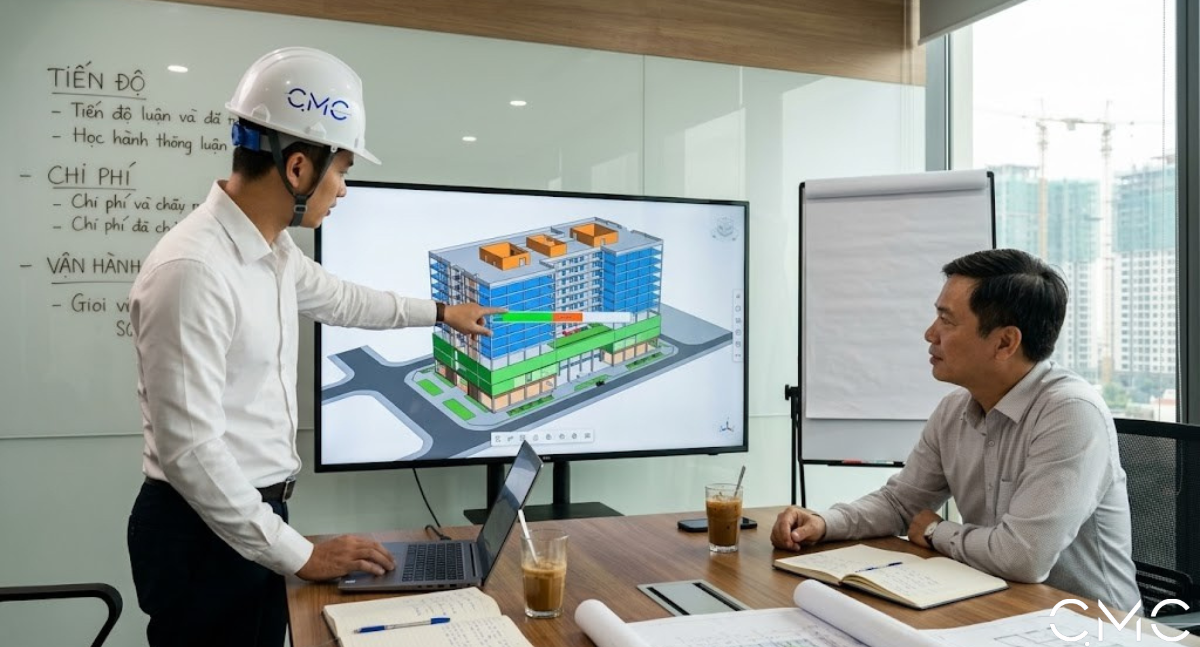
BIM is not a "screen exclusively for engineers."
"I don't know anything about technology, what's the point of watching this?"
Let's change it to:
Have you ever sat down to review a BIM model with the design team?
1 – Space
2 – Technology
3 – Intersection
4 – Not knowing what to ask
- 📞 Hotline: 0936361299
- 📧 Email: cmc.vn1013@gmail.com
- 🌐 Website: https://cmcarchitects.com/
- 📍 Address: 79A Xuan La, Tay Ho, Hanoi