Some projects require repeated revisions not because the production team is weak, nor because the ideas are poor, but simply because the initial brief wasn't clear enough. The person assigning the task thinks one way, the implementers understand it another, and the reviewers interpret it in a completely different way. As a result, the final image doesn't capture the intended spirit, requiring extra time for adjustments, slowing down the progress, and making the entire collaboration process more cumbersome.
So how do you ensure the perspective images capture the right spirit right from the first round?
The answer lies in a sufficiently good brief.
At CMC Architects, a rendering brief is more than just a few lines of preliminary description. It's the foundation for the rendering team to understand the true goals, emotions, and direction of the project before starting implementation. A clear brief results in not only more beautiful images but also a closer adherence to the design spirit, speeding up the approval process and significantly reducing the number of revision rounds.
Below are 9 key pieces of information to help make rendering briefs more effective, ensuring the images capture the project's essence from the very first round.
Why does the perspective brief determine the quality of the output image?

Many people believe that having a floor plan, a 3D model, or a few reference images is enough to create a perspective drawing. But in reality, that's only the "technical data." To achieve the desired image, the rendering team needs much more than that.
A perspective drawing doesn't just reflect shapes or materials. It also conveys:
- Spatial feeling
- Level of luxury or minimalism
- Atmosphere of the building
- The rhythm of life within the space
- Brand spirit or personality of the owner
If these elements aren't clearly briefed, the image can easily fall into the category of "correct but not quite right." That is, technically it might not be wrong, but it still doesn't convey the feeling the project truly needs.
Have you ever encountered a situation where the perspective drawing looks very polished, but still feels "not quite right"?
If so, the problem is most likely not in the editing phase, but rather in the brief itself
1. What is the purpose of perspective drawing
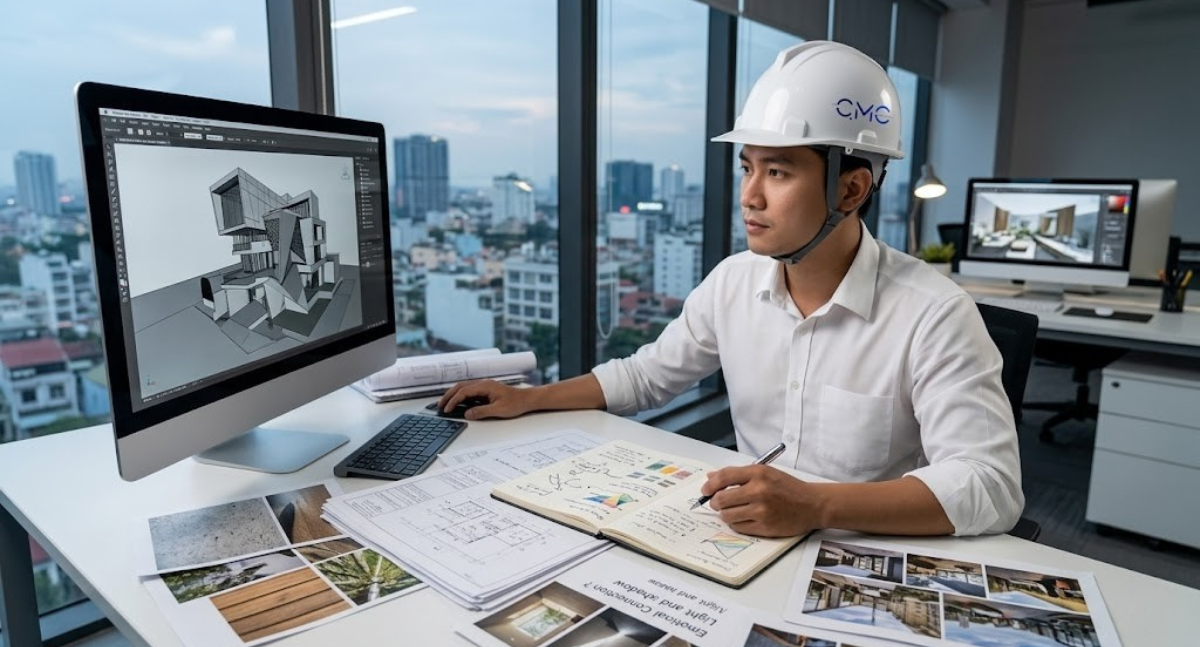
This is the first piece of information that needs clarification, but is often overlooked.
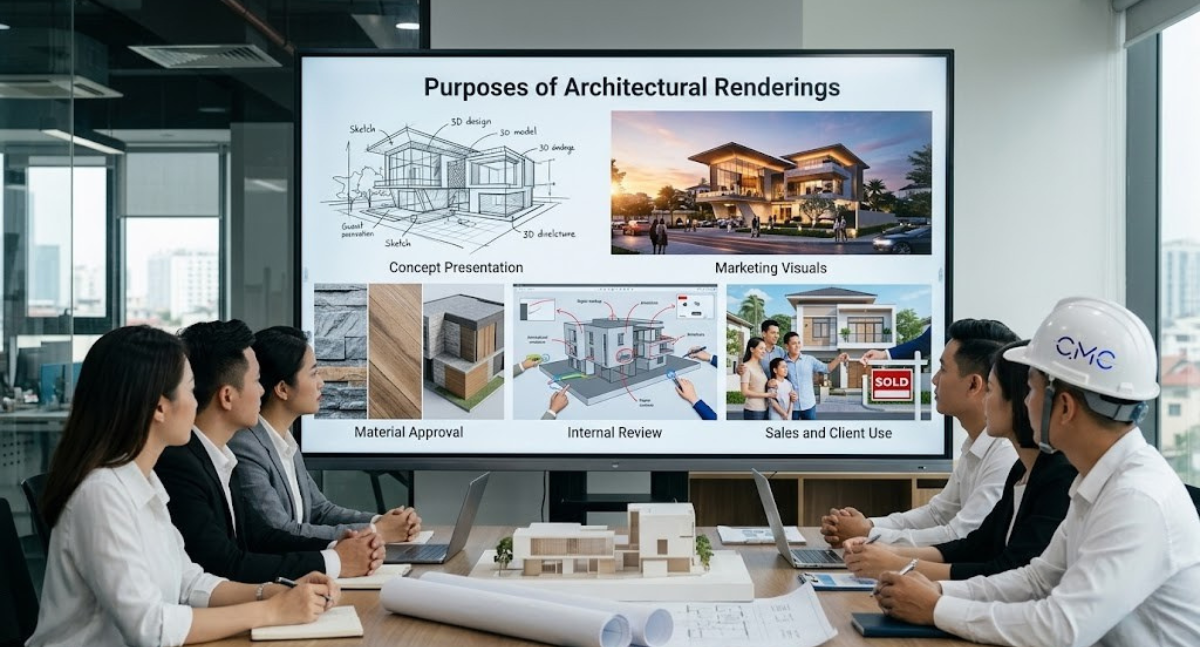
A perspective drawing can be created for many different purposes:
- Presenting concepts to clients
- Supporting project marketing
- Approving materials and spaces
- Internal presentations
- Used for sales documents
- Supporting design implementation
Each objective will require a different approach
If the images are used to finalize a plan with a client, clarity and spatial appropriateness will be prioritized. If used for marketing, emotional impact, lighting, and visual appeal may need to be emphasized. If used internally for technical purposes, images may need to be more detailed rather than overly "glamorous."
By correctly defining the objectives, the editing team will know what to prioritize from the outset instead of having to guess.
2. Which space is the focal point to be depicted?
Not every space in a project is equally important.
In an effective perspective brief, it's crucial to clearly identify the focal areas so the team can concentrate their efforts appropriately. For example:
- The living room is the focal point of a home.
- The reception area is the centerpiece of an office.
- The facade is the most important element of a commercial building.
- The bar area is the heart of a restaurant.
Without a clearly defined focal point, the image can become scattered. What needs to stand out may not be impressive enough, while secondary elements hog too much attention.
At CMC Architects, defining the focal point always helps the perspective drawing stay on track and avoids many revisions due to misplaced emphasis.
3. What is the design philosophy that the image needs to convey?
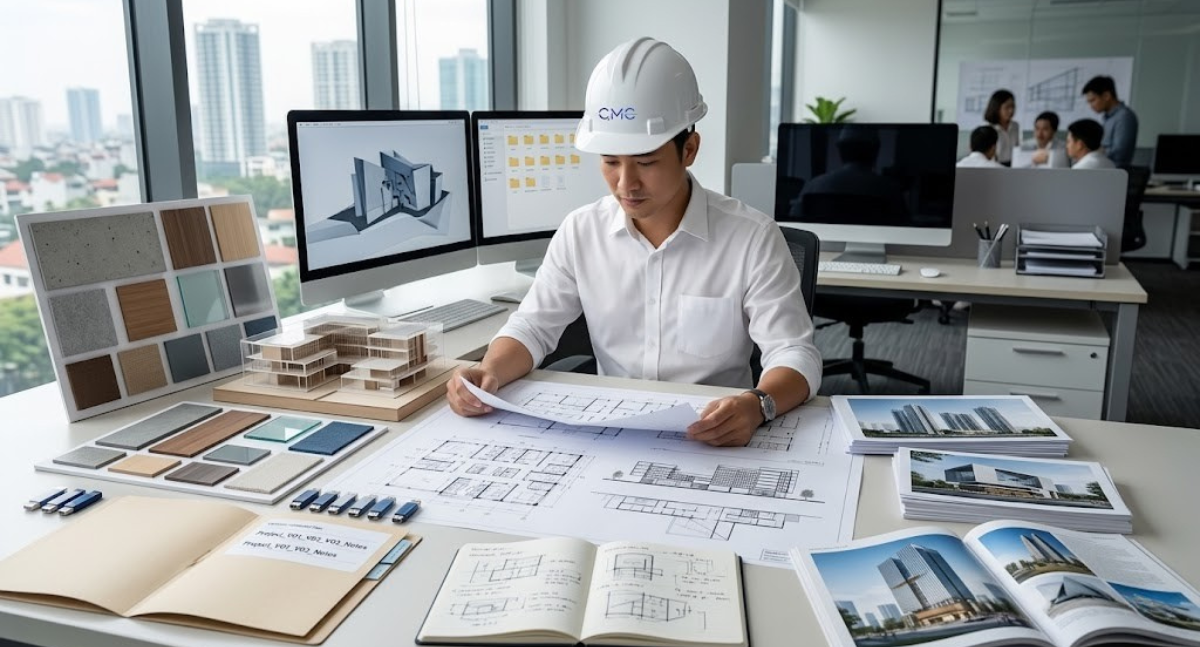
This is one of the most important parts of the brief
A space may use the same materials—wood, stone, glass—but the feeling it evokes will be completely different depending on the design philosophy the project aims for
For example, the image might need to convey one of the following sentiments:
- Minimalist yet warm
- Luxurious yet understated
- Modern and sharp
- Close to nature
- Youthful, creative, and energetic
- Elegant, sophisticated, and profound
If the brief doesn't specify this aspect, the editing team will have a hard time choosing the right lighting, colors, camera angles, contrast levels, or how to place objects in space
Simply put: the materials may be the same, but the visual spirit is unpredictable.
What do you want the viewer to feel the moment they see the perspective? That's the question that should be answered in the brief.
4. Who are the viewers of the images?
A good brief always needs to clearly define who the end audience is.
Because even in the same space, the way it's presented will differ depending on the image's target audience:
- Developer
- Homebuyers
- Corporate Clients
- Management Board
- Internal Team
- Construction Company
- Media Partners
If the images are for the end customer, emotional appeal and ease of visualization are crucial. If for the investor, adherence to the design plan and spatial logic may be prioritized. If for marketing, the images need to be highly engaging and evoke desire.
By knowing the target audience, the implementation team will understand who they are "speaking" to, and thus choose a more appropriate visual language.
5. What background documents need to be handed over in full?
No brief is effective without background data.
To get the right perspective right from the first round, the client or design team needs to provide all the necessary documents, such as:
- Floor plan finalized
- Relevant elevations and sections
- 3D model (if available)
- Concept file
- Material moodboard
- Reference images
- Design notes
- Latest agreed-upon changes
It's not just about having enough files, but also about having the right version.
Many editing rounds arise not because the images aren't good, but because the editing team is sticking with old files, while the new approach has changed but hasn't been clearly updated.
A clean and consistent set of background documents is always necessary for faster, more accurate image output with fewer revisions.
6. Which viewpoint should be constructed and what is its priority level?
This is extremely practical information, yet it's often vaguely worded.
Instead of simply saying "create a few key angles," the brief should clearly define:
- How many angles are needed?
- What area does each angle represent?
- Which angles are high priority?
- Which angles are just supplementary?
- Do we need an eye-level angle or an overall wide angle?
- Do we need to emphasize the facade, height, depth, or user experience?
Once the viewpoint is clearly defined, the editing team will save a lot of time on trial and error.
Especially in projects with tight deadlines, prioritizing the right viewpoint will make the initial result far more valuable than spreading resources evenly across all viewpoints
7. What are the desired lighting, timing, and atmosphere?
The same space, but just a change in lighting can completely alter the feeling.
An effective perspective brief should clearly state:
Do you want daylight or nighttime lighting?
Soft or strong contrasting lighting? Warm, luxurious atmosphere or bright, dynamic atmosphere? Do you need an image that feels realistic or more artistic? Are there any specific weather or season elements?
For example, a resort might need sunset lighting to enhance a relaxing atmosphere. A creative office might be better suited to bright daylight to emphasize dynamism. A high-end space might need soft, deep lighting to create a sense of luxury.
If this part isn't finalized early, the images are very likely to require multiple edits just to change the "mood."
8. What level of detail and style of post-production are you looking for?
Not every project requires the same type of imagery.
Some projects need realistic perspectives and minimal post-production to support the design approval process. Others require more emotionally evocative imagery for media purposes. Some want vibrant greenery, people, and settings. Others prefer clean, concise images that focus entirely on the architecture.
Therefore, the brief should clarify:
- Desired level of realism
- Light or heavy post-processing style
- Do you need more human activity?
- Do you want a minimalist, clean image or a vibrant, lively one?
- Do you prioritize commercial or technical aspects?
Once this aspect is clear, the editing team won't have to go through the "edit it and see if it fits" approach, but can set the direction right from the start.
9. What things should be absolutely avoided?
This is very brief information, but it's extremely useful.
In many cases, simply knowing what not to do has saved the implementation team many revisions.
For example, the brief might state:
- Avoid using overly cool tones.
- Avoid making the image feel too dark.
- Don't include too many decorative details.
- Don't make the image too "artificial".
- Don't add people or distracting backgrounds.
- Avoid overly distorted or dramatic camera angles.
These notes help the team understand the aesthetic boundaries of the project and avoid having to correct errors that could have been avoided from the start.
A good brief doesn't waste time; in fact, it saves a lot of time later on.
Many people are hesitant to give a detailed brief because they think it's time-consuming. But in reality, a clear brief always saves a lot more time than going through multiple rounds of revisions.
Once the 9 pieces of information above are clarified from the start, the editing team can:
- Understand the project faster
- Stay on track from the first version
- Reduce guesswork
- Reduce the number of revisions
- Save time for both the client and the client
- Improve the quality of the output images
At CMC Architects, an effective perspective drawing doesn't start with modeling software, but with the entire team understanding the intended message.
To get the right visuals right from the first round, start with the brief
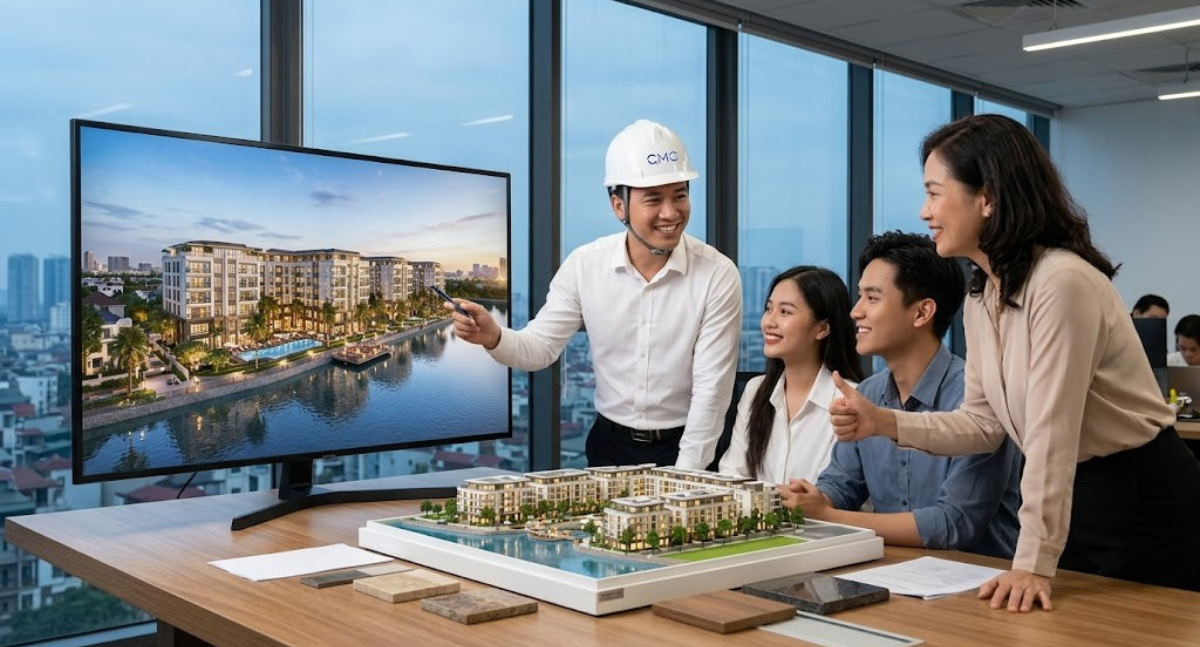
A beautiful rendering is something everyone desires. But a rendering that truly captures the project's spirit from the very beginning is what truly makes a project effective.
Because when the image is right from the start, the design review process is smoother, progress is faster, and collaboration between all parties becomes much more pleasant.
If you are preparing a rendering brief for a project, consider this:
Is the image's objective clear enough?
Has the design philosophy been described specifically enough?
Does the rendering team have enough data to understand the concept correctly from the outset?
Just a slightly more accurate brief can reduce many subsequent revision rounds.
Are you looking to create renderings for an architectural, interior design, or real estate project?
Do you want the image to be accurate from the first round instead of requiring multiple revisions?
Connect with CMC Architects to build a clearer brief and create more effective renderings for your project.
- 📞 Hotline: 0936361299
- 📧 Email: cmc.vn1013@gmail.com
- 🌐 Website: https://cmcarchitects.com/
- 📍 Address: 79A Xuan La, Tay Ho, Hanoi