Many developers only begin discussing panel systems in depth when the frame is almost complete, when the construction crews are waiting for the site to be cleared for further work, or when the project has entered the stage requiring enclosed spaces. At that point, all sorts of questions arise simultaneously:
The answer is yes. And often there's more than we think.
Why shouldn't insulation panels be considered "later"?
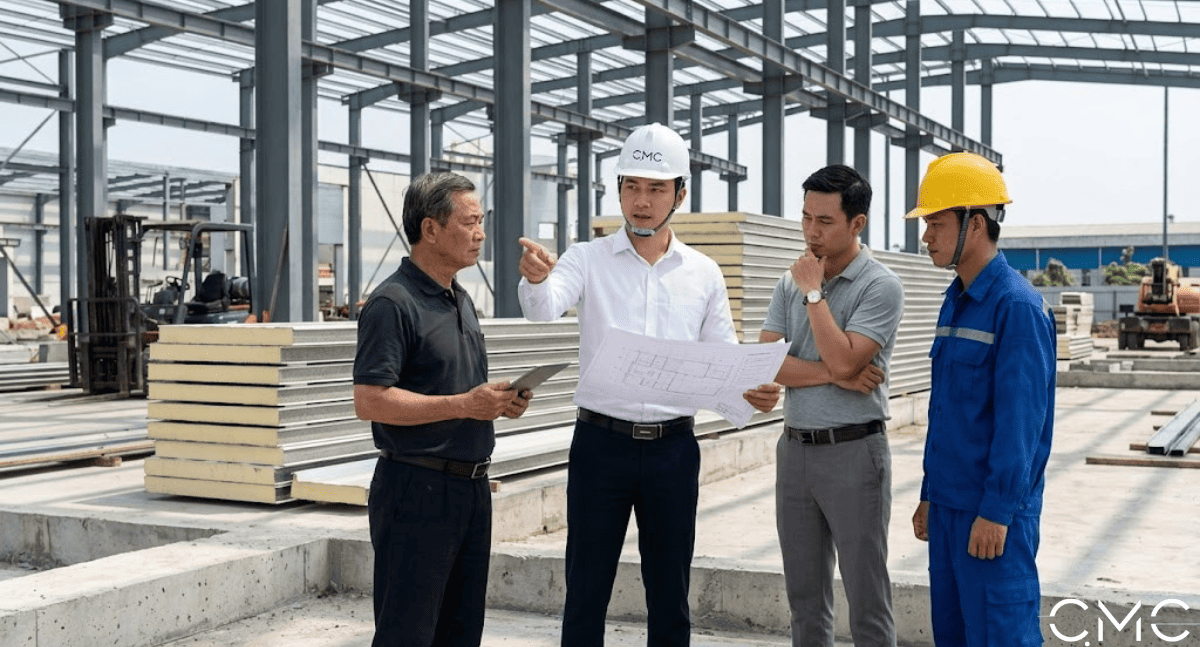
Insulation panels are often viewed as a finishing touch. But in reality, they are more than just a "cosmetic covering." They directly affect:
Speed of project completion
Ability to organize subsequent construction items
Level of issues arising in details of doors, joints, accessories, and technical locations
Final environmental quality
CMC is introducing insulated panels as a solution with excellent sound and heat insulation capabilities, suitable for industrial buildings, cold storage facilities, and factories. This means that panels are not just an outer shell, but an integral part of the functional design from the outset.
To put it simply:
The later you finalize the panel, the more likely you are to slow down the entire workflow that follows.
Delaying one decision means delaying many tasks.
But the panel hasn't been finalized yet.
It doesn't sound that serious, does it?
But in reality, the mere fact that the panel hasn't been finalized can cause delays:
- Finalize the covering solution
- Finalize details of doors, skylights, and technical openings
- Finalize the intersection plan between panels and steel structure
- Finalize the construction order of the relevant teams
- Finalize the auxiliary materials and accessories
Where can you make an early decision on insulation panels to save on finishing time?
1. Save time in the design coordination phase
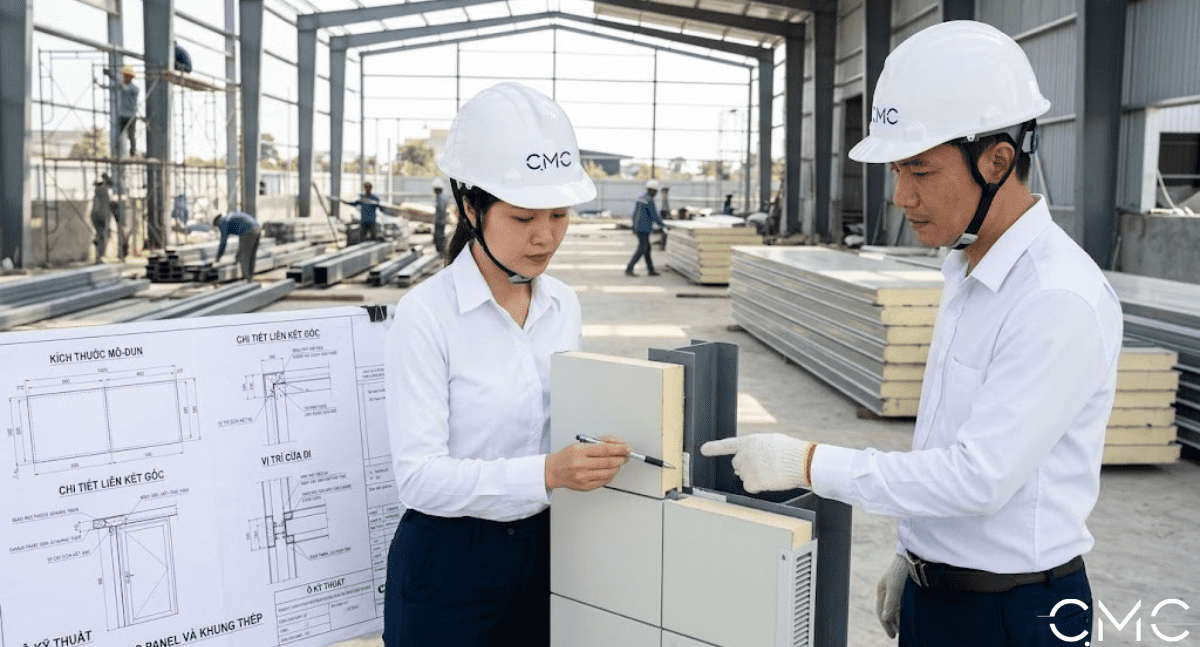
When the panel is decided early, the design team and the construction team can coordinate more effectively from the outset regarding:
- Module dimensions
- Connection details
- Location of doors, vents, and technical openings
- Solution for the interface between panels and steel frame
- Treatment methods at corners, edges, baseboards, and roofs
Conversely, if delayed, the drawings are very likely to need revisions. And each revision not only wastes time on paper, but also affects material procurement and site organization.
CMC is also emphasizing early error detection using BIM/Revit/AutoCAD to reduce construction risks, limit unforeseen issues, and control progress. This principle is very true to the panel story: the earlier the finalization, the fewer late corrections.
2. Save time in the materials ordering process.
- Finalize color, thickness, and core material
- Plan your supply
- Avoid being caught off guard when the project reaches the stage where installation is needed immediately
This is a major difference between proactive construction and construction that is rushed to meet deadlines.
Think about this:
If the frame is finished but the panels aren't finalized, who will have to wait?
3. Saves time during the assembly process.
- Reduce time spent on on-site measurements and adjustments
- Minimize unnecessary cutting and trimming
- Reduce the risk of installing and then having to dismantle and readjust components
- Accelerate the completion of the project
Một công trình được khép kín sớm luôn có lợi thế rất lớn. Ngay khi phần bao che ổn định, các hạng mục bên trong thường cũng dễ tăng tốc hơn.
4. Save time in related finishing stages
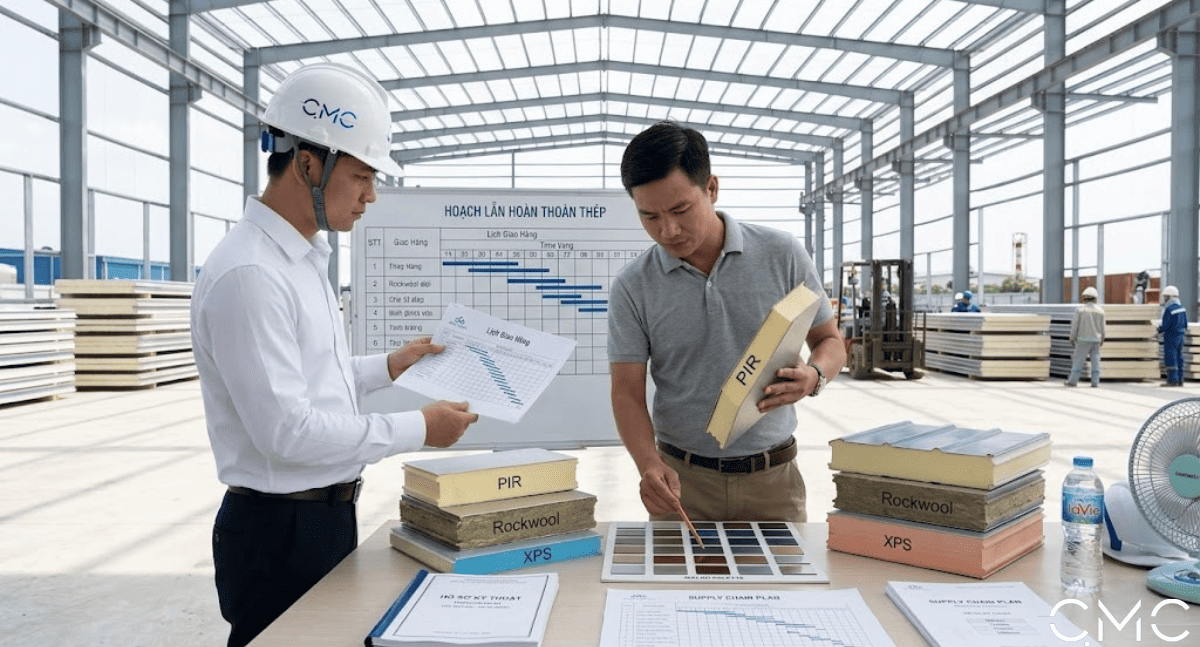
Panel doesn't stand alone
There are also:
- Doors
- Windows
- Technical systems
- Cable trays
- Lights
- Suspended equipment
- Through-wall or through-roof locations
5. Saves time by reducing the need for rework
When the panel is decided early, you have a better chance of discovering:
- The dimensions are not ideal.
- The door placement is not optimal.
- The intersections with the structure are not aesthetically pleasing.
- There are still technical conflicts.
- The construction sequence is not optimal.
Early detection means easier correction
Late detection means more difficult correction
That's why the mindset of "closing things early to avoid making corrections later" is always valuable
The short answer is:
sooner than you think.
Ideally, panels should be considered right from the overall design phase, not waiting until the framework is nearly complete before discussing the details.
At this stage, you don't need to finalize everything 100%. But at a minimum, you should clarify the following points:
- Where will the panels be used in the project?
- What is the primary objective: thermal insulation, sound insulation, or environmental control?
- What type of panel is planned?
- Preliminary thickness?
- Areas with doors, openings, or technical passages?
- Aesthetic and basic color requirements?
Simply clarifying these points early on will make the subsequent progress much easier
5 questions to ask before finalizing the panel
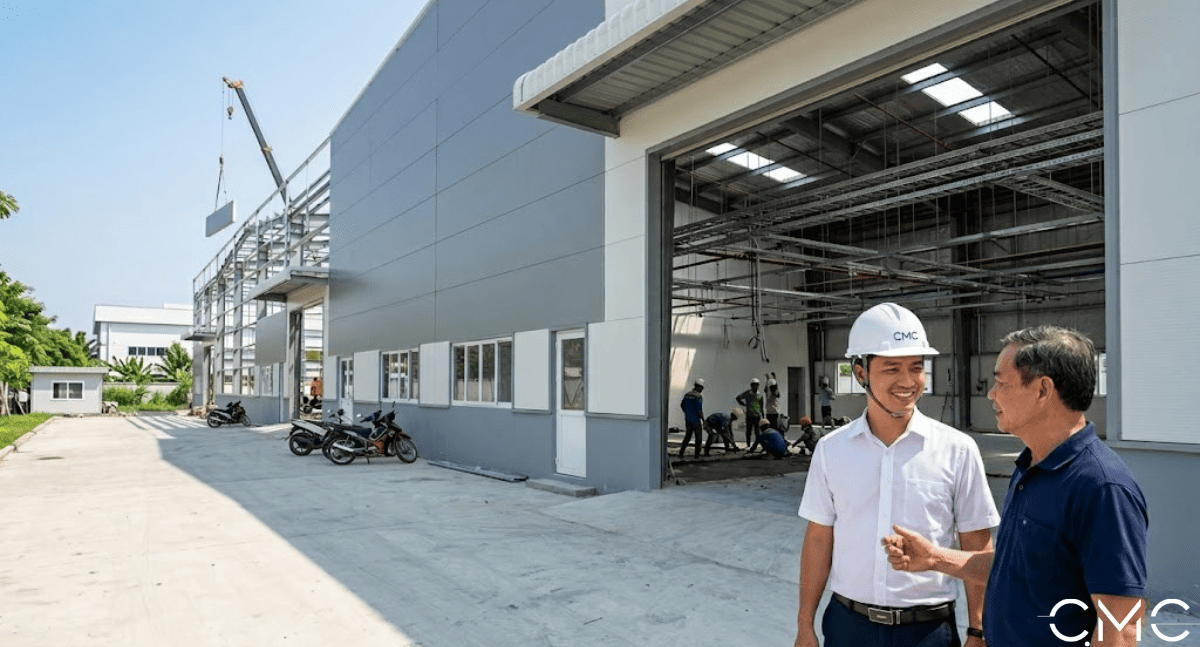
Sometimes, simply changing the perspective on question number 5 can lead to a completely different decision-making process
A very common mistake
Many people think:
Conclude
Make the decision a step ahead
Because in construction, there are things that save money.
There are things that save labor
And there are decisions that, if made at the right time, can save a significant amount of time.
What stage of the project are you currently in?
A. Planning in progress
B. Design completed, construction about to begin
C. Construction underway and concerns about completion schedule are starting
Leave your comments quickly in this format: A – B – C.
Who knows, by correctly identifying the current stage, you might know whether or not you should finalize the panel right now.
- 📞 Hotline: 0936361299
- 📧 Email: cmc.vn1013@gmail.com
- 🌐 Website: https://cmcarchitects.com/
- 📍 Address: 79A Xuan La, Tay Ho, Hanoi