In an architectural or construction project, there are many things worth recounting.
It could be the moment the building began to take shape from the bare ground.
It could be the process of each layer of material, each component, each line gradually becoming clear.
Or it's the journey of transforming a design on paper into a real, vibrant space with practical use.
And among the most visually compelling storytelling methods, construction timelapses are always a very special format.
In just a few dozen seconds or minutes, a timelapse can show viewers a journey spanning months, even years. It not only creates a visually impressive impact but also makes the project more vibrant in the eyes of clients, partners, and the community.
But there's a crucial question that many people only consider after they've started filming:
Where should you film a construction timelapse to ensure it's both visually appealing and truly useful for marketing?
Filming a timelapse isn't just about setting up a camera and recording continuously. If the camera angle isn't right, the footage might lack focus, struggle to tell a story, fail to clearly show the process, or lack the value for future marketing.
At CMC Architects, timelapse shouldn't be viewed as merely a recording task. It's a valuable content asset that can serve your brand, project communications, company profile, and even how your business tells its story.
So, how do you choose the right filming location for a timelapse that's both visually stunning and has lasting value?
Let's find out.
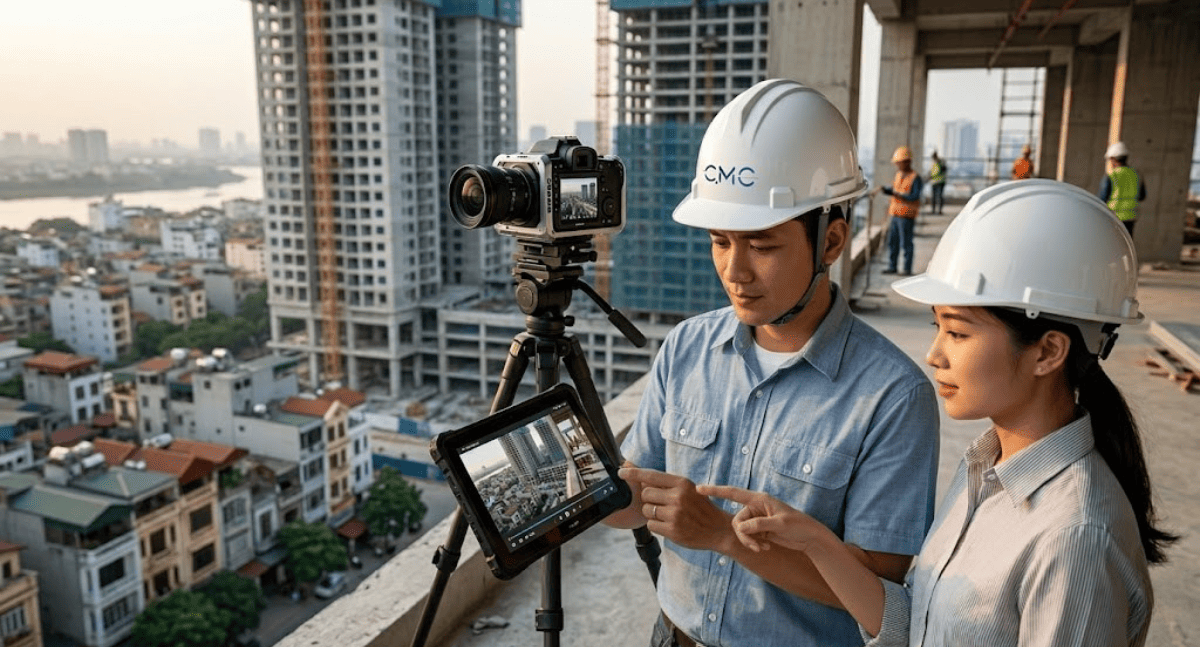
Why does the location of a timelapse video determine the quality of the media?
Many people think that all you need is a good camera and enough recording time to create a beautiful timelapse video. But in reality, the first deciding factor lies in the camera's placement.
For the same project, choosing the right filming location can result in a video that:
Clearly shows the construction progress
Highlights the scale of the project
Shows the changes through each stage
Creates a professional and attractive feel
Easily edited into various content for media purposes
Conversely, if the wrong location is chosen, the timelapse can easily end up in the following situation:
- The images are beautiful but don't tell a story.
- The activity is visible but the changes aren't clear.
- The camera angle is obscured over time. The structure looks unimpressive in the photos.
- Difficult to reuse for future marketing purposes.
In other words, a beautiful timelapse isn't necessarily useful, and a useful timelapse needs to be carefully planned right from the camera's placement
Have you ever seen a timelapse video of a construction project that was very elaborate but didn't leave much of an impression? The problem likely lies in the very first camera angle
Timelapse photography isn't just about aesthetics; it's about telling the true story of the journey
When it comes to timelapse videos, many people often focus on the visual aspect: filming in a way that is beautiful, eye-catching, and impressive. That's true, but it's not enough.
An effective construction timelapse video also needs to answer questions such as:
- How has the project changed over time?
- Which phase was the most significant?
- How is the scale of the project demonstrated?
- Is the project's organizational, construction, or implementation capabilities clearly visible?
- What will viewers remember after viewing the project?
If a timelapse only shows fast-moving images without demonstrating the logical development of the project, its communicative value will be greatly diminished
At CMC Architects, a valuable timelapse video is one that allows viewers to visualize the process while also serving as a powerful communication tool in various contexts: websites, social media, company profiles, project introduction videos, presentations to clients or partners
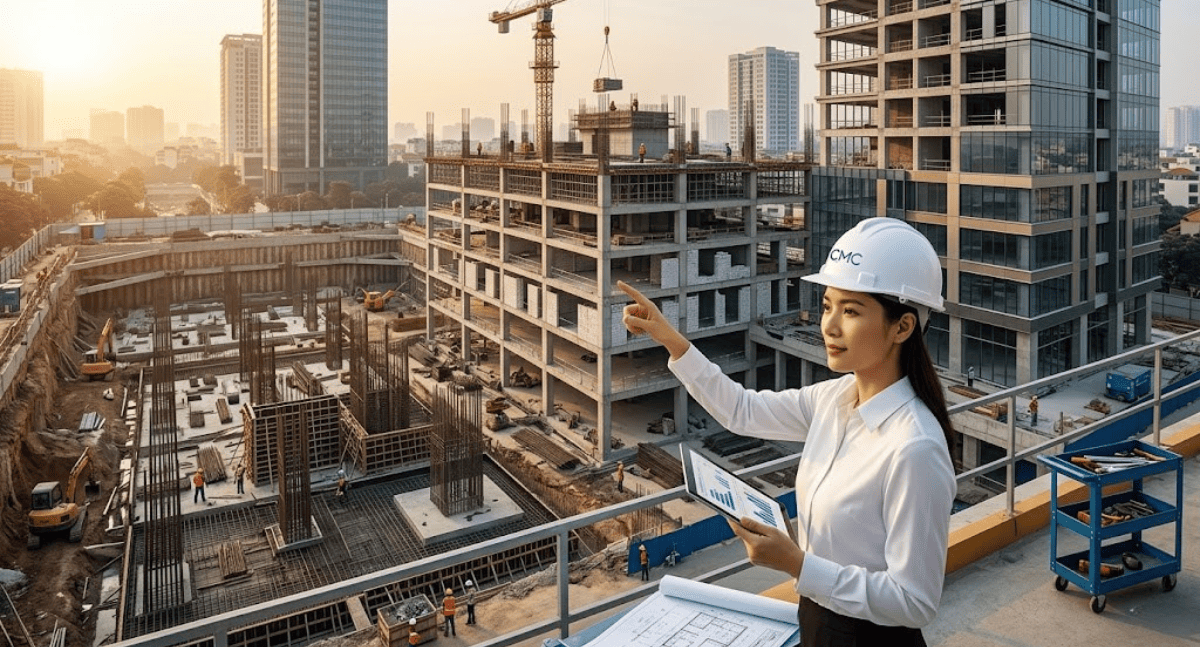
1. A camera angle that provides a comprehensive view of the entire building should be prioritized.
This is the first and most important principle.
A good timelapse video should allow viewers to see the entire project or the most essential parts of it throughout the construction process. The more comprehensive the view, the stronger the ability to tell the story of the project's development.
The reason is simple:
Timelapse is a format that shows change over time. If the camera angle is too narrow, viewers will find it difficult to appreciate the overall journey of the project.
A good wide-angle shot usually helps to showcase:
- Development from foundation to complete form
- Changes in height, facade, and structure
- Progress through each stage
- Relationship of the building with its surrounding context
This type of camera angle is ideal when your goal is to create a video with high overall value, easy to use in brand communication and project presentations
However, "wide coverage" doesn't mean too far away. If the camera is positioned too far, the structure may appear small, lacking detail and sufficient visual impact
The ideal balance is one that's wide enough to see the entire route, but close enough so the building remains the main focus
2. Choose a location that will be less likely to be obscured over time
This is a very common mistake when filming construction timelapses.
Initially, the camera angle might look great. But after just a few weeks or months, the construction site grows larger, scaffolding appears, construction equipment moves, vehicles constantly come and go, or some other element unexpectedly blocks the view. As a result, the video loses its continuity, its value diminishes, or it becomes unusable as originally intended.
- Therefore, when choosing filming locations, you need to consider this beforehand:
- What direction will the construction take?
- Are there any elements that could obstruct the camera later?
- Are there any permanent or temporary obstructions in the surrounding area?
- Cards, signs, or nearby structures that could interfere?
- Creation equipment such as cranes, containers, and fences that could block the view?
A beautiful filming location on the first day isn't necessarily the most effective location for the entire project lifecycle.
That's why the location for a timelapse shoot needs to be viewed as a strategic decision, not just a technical one.
3. The device should be placed in a location where the "change" is most clearly visible
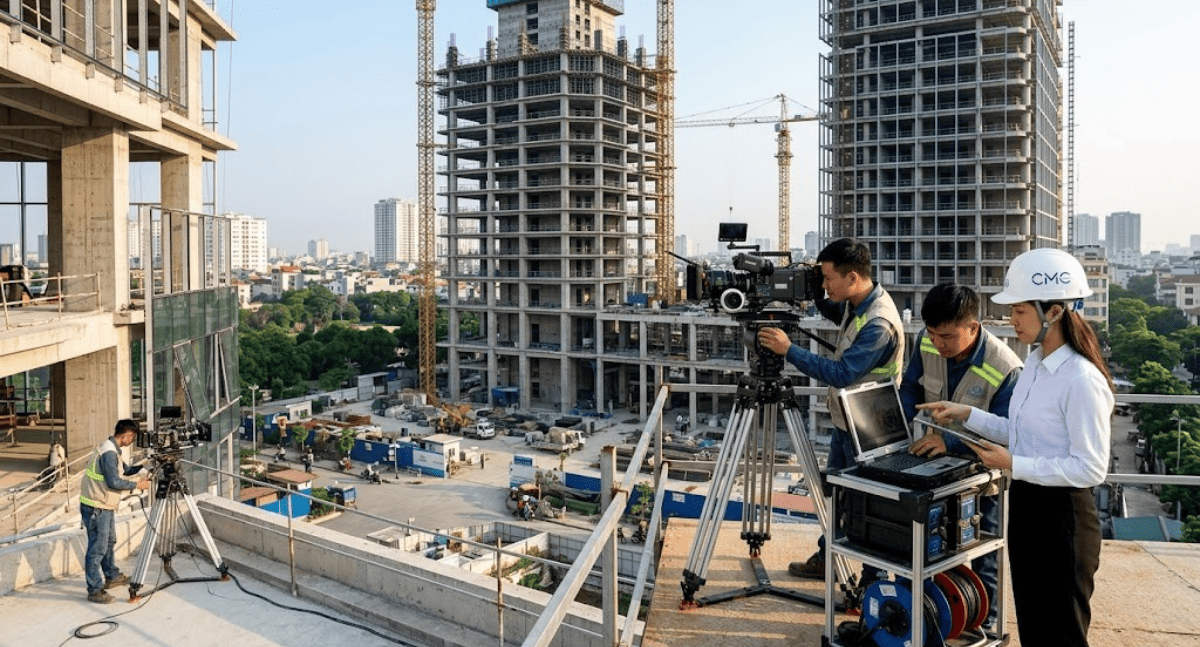
Timelapses are most engaging when viewers see the changes clearly and rhythmically.
Therefore, choose a location that allows the structure to "grow" most noticeably over time.
Some locations that often work well include:
- A diagonal angle on the facade to show the developing form
- A position that clearly shows the main axis of the building
- A point where both the structure and the finishing layers gradually appear
- An angle with good spatial depth to allow the viewer to perceive the progress more clearly
If you only film a flat surface with little change, a timelapse can easily lack drama. Viewers may see the structure changing, but they won't strongly feel the process.
Conversely, a good camera angle will make each stage of the construction project clearer: from the site plan, foundation, structural frame, cladding, finishing, to the final appearance.
This is especially important if the video is not just for archiving, but also for creating highly engaging media content.
4. Prioritize camera angles that include the surrounding background to enhance visual value.
A beautiful building timelapse isn't just about the building itself, but also about how it "interacts" with its surroundings.
If the camera angle includes the sky, the changing light throughout the day, the movement of the city, traffic, people, or surrounding nature, the video will have much more depth.
These elements help create a timelapse:
- It feels more vibrant.
- It creates a more engaging rhythm of movement.
- It gives viewers a clearer sense of the scale and location of the structure.
- It enhances the cinematic quality and appeal of the media content.
However, the background should only be a supporting element. The building itself should remain the focal point.
A camera angle with too many surrounding elements but lacking prominence for the building will dilute the message. Therefore, it's crucial to choose an angle with just enough background to serve as a backdrop for the building's narrative.
5. If possible, there should be a main corner and a secondary corner
This is a highly recommended approach if the project has significant media value.
Instead of just filming from a single angle, you could build:
- A main angle to follow the entire construction process
- A secondary angle to highlight a particular aspect
For example:
- Main angle shows the entire project from start to finish
- Secondary angle focuses on the facade
- Secondary angle monitors the most active construction area
- Secondary angle shows the surrounding context or a distant view
This method provides more material for the final video during editing. Simultaneously, it makes it easier for the media team to create multiple versions of the content: short videos for social media, longer versions for websites, project portfolios, or capability showcase clips.
If you only have a budget for one camera angle, choose the strongest overall angle. But if you can invest more, a well-placed secondary angle will significantly increase the value of the content.
6. Think ahead about where you will use this video
This is a very important question, but one that is often overlooked.
Before setting up your timelapse camera, ask yourself:
- Is this video for a website or social media?
- Is it for brand communication or to introduce a specific project?
- Is it for clients, partners, or internal staff?
- Do you want to emphasize aesthetics, construction speed, or implementation capabilities?
- What do you want viewers to remember after watching it?
If the goal is brand communication, the camera angle should prioritize visual appeal, stability, and a good display of scale.
If the goal is to demonstrate construction or implementation capabilities, the camera angle should clearly show progress, site organization, and change processes.
If the goal is to tell a design-construction story, the camera angle should be continuous and rich in context.
At CMC Architects, every type of content should be considered in terms of its intended use. Because only when you know what the video will serve can you choose the truly appropriate camera angles.
7. Don't forget the lighting and weather conditions
A well-composed shot but with poor lighting or frequent backlighting will significantly affect the quality of the timelapse.
When surveying camera placement, pay attention to:
- Sunlight direction throughout the day
- Probability of glare or backlighting
- Seasonal weather changes
- Probability of dust accumulation, water stains, and wind vibrations
- Stableness of the mounting position
A timelapse video spanning months cannot rely solely on the beautiful conditions of the first few days. It needs to consider long-term stability.
That's why location selection should incorporate aesthetic, technical, and media considerations, rather than just focusing on a visually appealing frame at the moment.
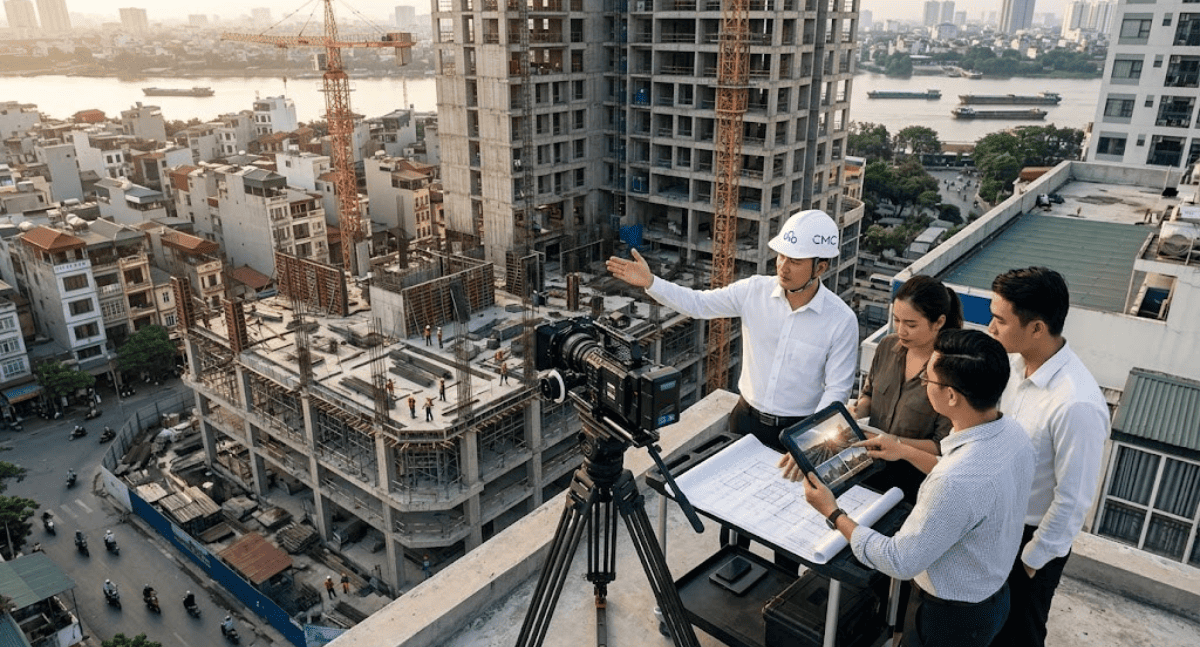
When is a construction timelapse useful for media?
A construction timelapse video is truly useful when it accomplishes at least three things:
1. Clearly describe the project's development journey.
Viewers can see how the project has changed, grown, and gone through different stages.
2. Create a strong visual impact.
The video must be visually appealing enough to attract viewers even if they don't know much about the project.
3. Reusable for multiple content purposes.
A good timelapse can be used for websites, social media, company profiles, corporate videos, or presentations.
Therefore, the filming location needs to be not only visually appealing in the present moment but also have long-term value for communication.
CMC Architects views project timelapses as a long-term content asset.
At CMC Architects, each project has its own story. And timelapse is one of the most visual ways to tell that story.
But for the video to be truly valuable, filming needs to be prepared from the beginning with a clear content strategy:
- What is the purpose of filming?
- Who is watching?
- In what context will the filming be used?
- And where should the filming take place so that the structure appears most beautiful, clearest, and most convincing?
When properly planned, timelapses are more than just beautiful documentation. They become a crucial part of how businesses document project journeys, build trust, and communicate their capabilities to clients.
Conclusion: For a timelapse that is both beautiful and useful, choose your camera angles like you choose your storytelling.
A good construction timelapse video doesn't start with the camera. It starts with the question: what story do I want to tell about this project?
When the story is clear, the camera angle will be clear.
When the camera angle is right, the image will be more powerful.
And when the image is powerful enough, the timelapse will not only be beautiful to watch, but also truly useful for communication.
If you're planning to document a construction project, don't just think about filming. Think about filming in a way that will benefit your brand, project, and long-term marketing.
Looking to create a timelapse for a construction project?
Need to choose camera angles that are both aesthetically pleasing and valuable for your website, social media, or company profile?
Connect with CMC Architects to build the most visually effective and valuable storytelling approach for your project.