With factories, industrial parks, and warehouses expanding in scale, steel handrails have become an indispensable element in ensuring workplace safety, optimizing movement, and increasing the lifespan of structures. Although a small detail, steel handrails play a crucial role in reducing the risk of falls, preventing slips, supporting operations, and complying with technical standards.
So how should steel handrails be designed? What are the special requirements for corridors, staircases, and work platforms in factories? This article will help you fully understand the design standards for steel handrails and how to apply them to different types of industrial buildings.
1. Why are steel handrails important in industrial buildings?
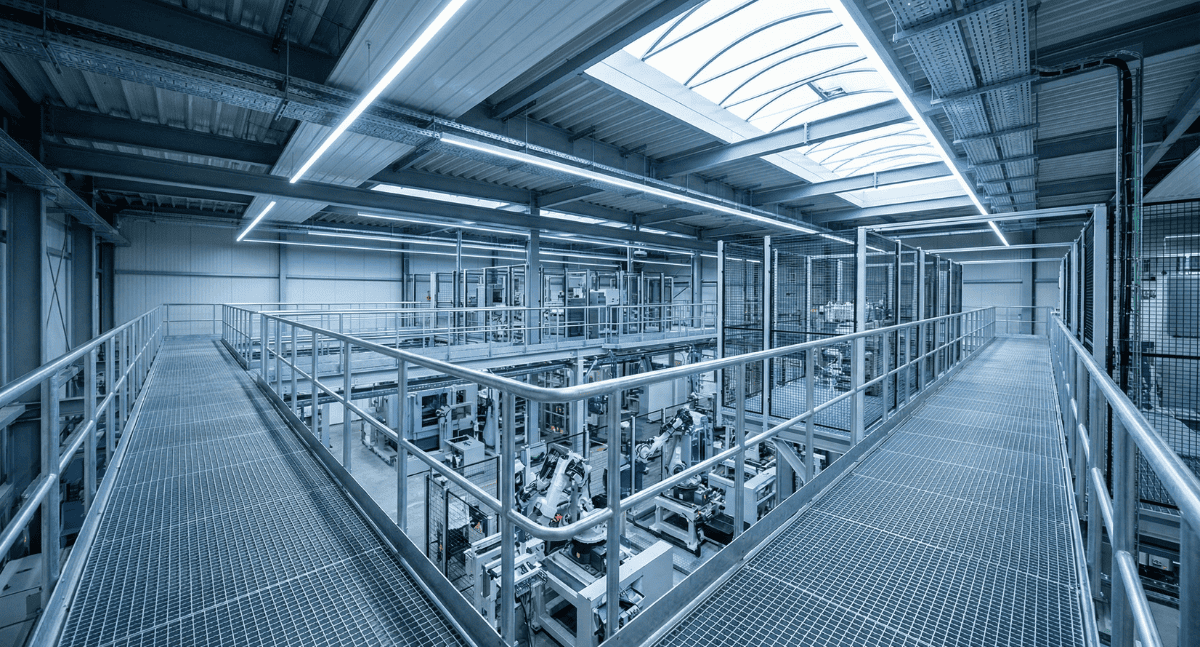
Unlike civil engineering projects, industrial environments always present numerous risk factors:
- High-altitude work areas
- Slippery floors due to oil, grease, or industrial dust
- Work areas subject to load and vibration
- High-density 24/7 workforce
Therefore, steel handrails are considered the first line of defense to increase safety. A good handrail will help:
- Safe navigation and movement guidance
- Reduces the risk of falls from heights
- Ensures stability in technical areas
- Enhances overall aesthetics – making the project look more "clear and professional"
2. Design standards for steel handrails in industry
2.1 Handrail height
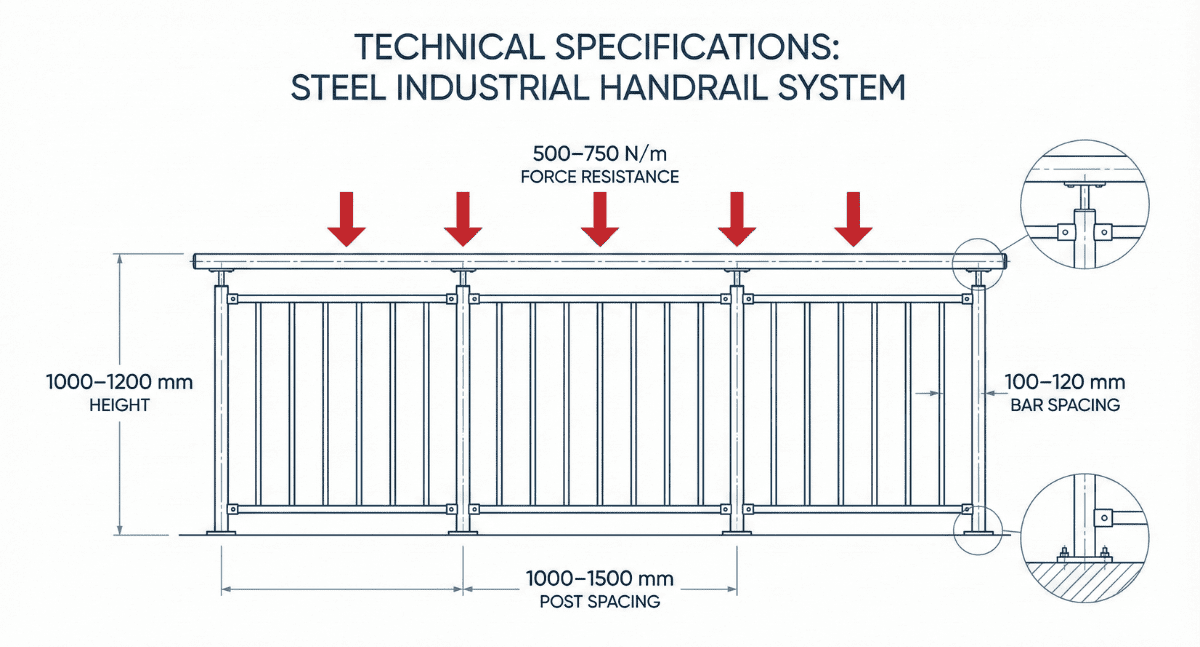
According to international standards such as OSHA, EN ISO, and Vietnamese standard TCVN, the handrail height is typically within:
- 1,000 – 1,200 mm for stairwells
- 900 – 1,100 mm for work corridors or work platforms
This ensures users have a secure support point when moving.
2.2 Spacing between bars and columns
- Vertical bar spacing: no more than 100–120 mm to prevent people/objects from falling through.
- Post spacing: 1,000–1,500 mm depending on the design load.
- The top handrail must have rounded edges to avoid sharp corners.
2.3 Loads and Bearing Capacity
Steel handrails must withstand a horizontal force of 500–750 N/m (depending on the standard).
This level ensures that the handrail will not deform when many people lean on it.
2.4 Materials and Surface Treatment
In industry, environmental conditions typically include:
- Chemicals
- Moisture
- High temperatures
- Oil and grease
- Outdoor corrosion
Therefore, the commonly used materials are:
- Hot-dip galvanized steel (corrosion resistance 20–50 years)
- Powder coating or epoxy coating
- Stainless steel 304/316 for food and pharmaceutical plants
2.5 Welding and Joint Control
A standard handrail must:
- Welds are even and free of porosity.
- No cracks or fractures.
- Joints are smoothly ground.
- Bolt connections meet the correct strength grade and specifications.
This is also a common mistake made in many small-scale construction projects.
3. Applications of steel handrails in industrial buildings
3.1 Technical Staircase
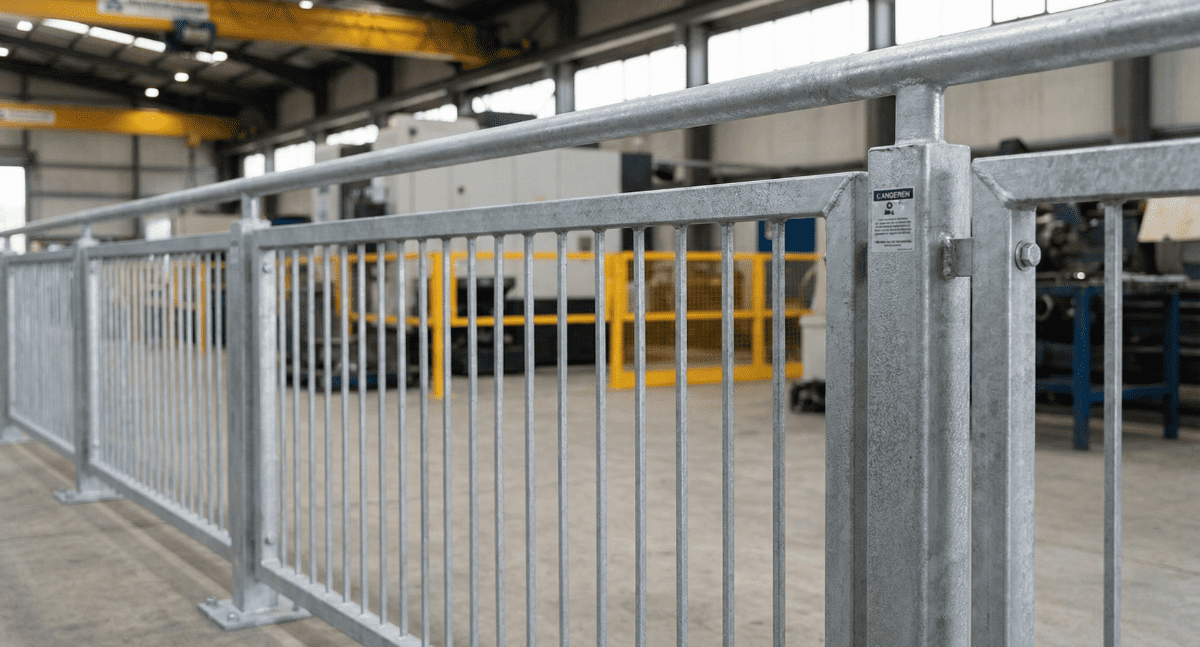
Handrails on staircases should be sturdy, have anti-slip ridges, and be at an appropriate height to support the operator.
3.2 Work platforms and elevated walkways
In areas with a height >1m, steel handrails must have the following:
- Top guardrail
- Middle guardrail
- Anti-slip footrest
3.3 Food and pharmaceutical manufacturing plants
Stainless steel handrails are preferred because:
- Stainless steel
- Easy to clean
- Meets HACCP standards
3.4 Cold storage – freezer factory
Handrails must be made of a corrosion-resistant material that does not become brittle at low temperatures.
4. Common handrail design flaws (and how to avoid them)
- Incorrect height → difficult to use, unsafe
- Too far apart vertical bars → risk of people falling through
- Poor quality welds → handrails easily break under load
- Surface not treated according to actual environmental conditions → rusts quickly
- Load capacity ignored → fails acceptance testing
Solution: Design and integrate BIM from the outset, and conduct preliminary simulations to avoid errors.
5. CMC Architects – A company specializing in the design of steel handrails according to international standards.
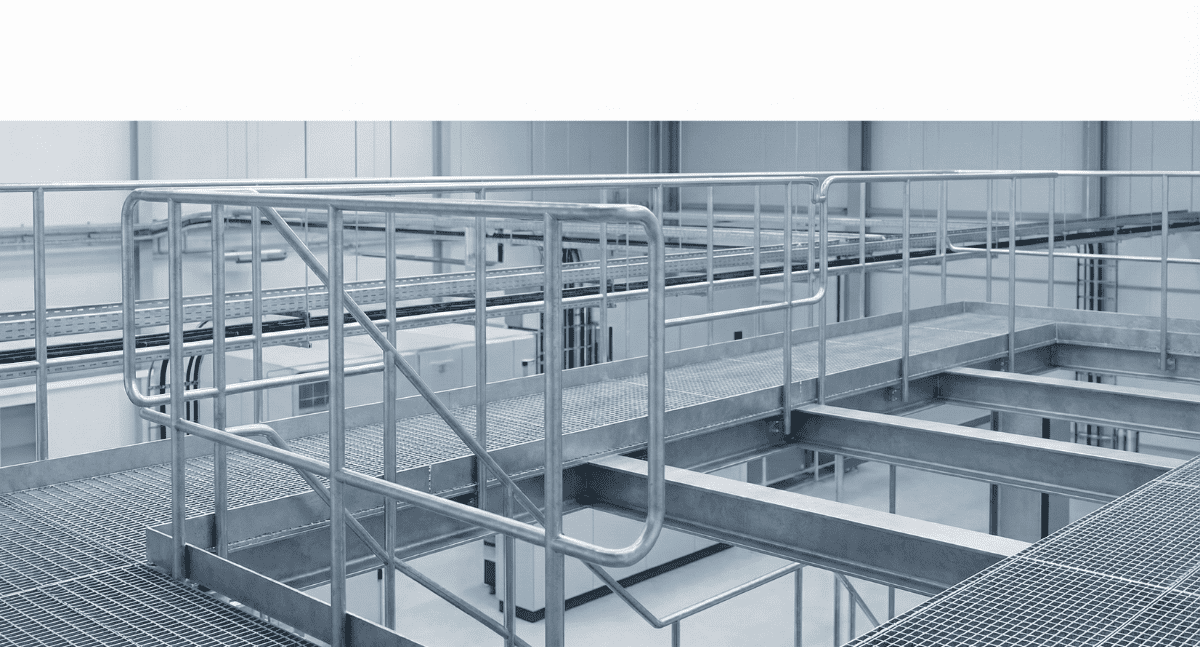
At CMC Architects Vietnam, each steel handrail set is:
- Design according to TCVN, EN, OSHA standards
- BIM simulation for collision testing
- Detailed drawings for easy construction
- Consultation on suitable materials for each environment
- Support from design → production → installation → acceptance testing
We believe that industrial safety stems from precision in every detail, and steel handrails are the clearest example of this.
- 📞 Hotline: 0936361299
- 📧 Email: cmc.vn1013@gmail.com
- 🌐 Website: https://cmcarchitects.com/
- 📍 Address: 79A Xuan La, Tay Ho, Hanoi