In industrial projects, staircases are not just passageways – they are an essential part of the structural system and operational safety. Especially for multi-story factories, warehouses, cold storage facilities, or production zones – choosing the right type of steel staircase directly affects usability, maintenance, and space efficiency.
So, should you choose a straight staircase, a spiral staircase, or one with a landing?
Let CMC Architects analyze the most common staircase types, share real design experience, and suggest the right options for each project.
🪜 1. Straight Steel Staircases – Simple, Efficient, and Quick to Install
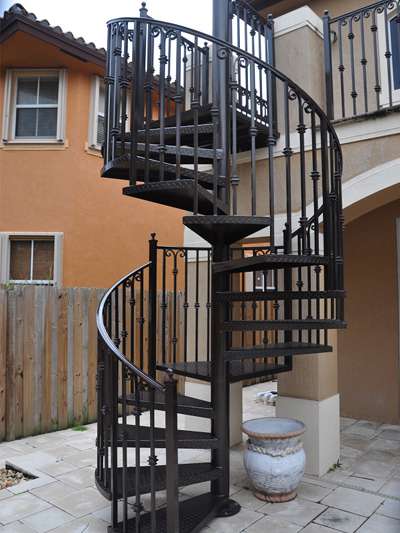
🔹 Features:
-
Simple structure: a single flight connecting two floors
-
Commonly used in factories with spacious layouts and moderate floor heights
-
Quick installation with minimal bending details
✅ Advantages:
-
Easy to fabricate and assemble
-
Suitable for cost-saving projects
-
Easy to maintain and replace parts
⚠️ Notes:
-
For high-rise floors, overly long stairs can cause fatigue when climbing
-
Lack of landings may be unsuitable for areas with manual material handling
📌 Suitable for:
Warehouses, technical rooms, secondary emergency exits, low-rise factories (under 4m)
🌀 2. Spiral (Circular) Staircases – Space-Saving and Highly Aesthetic
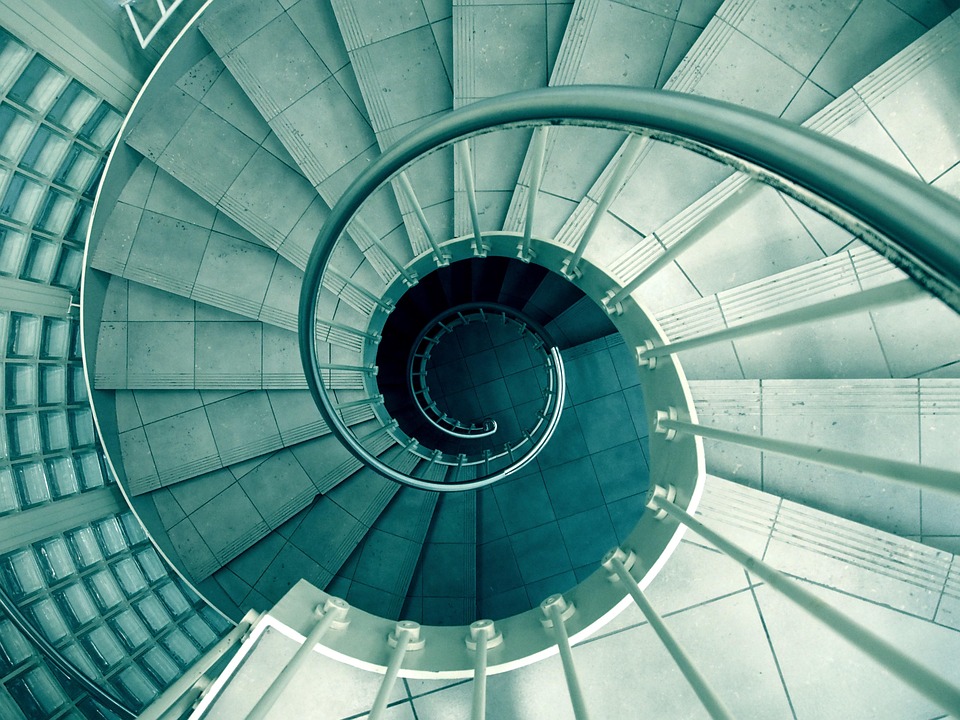
🔹 Features:
-
Designed in a circular spiral around a fixed axis
-
Preferred in compact spaces or areas requiring high aesthetics
✅ Advantages:
-
Maximizes floor space efficiency
-
Visually striking design that enhances architectural appeal
-
Ideal for secondary or technical inspection staircases
⚠️ Notes:
-
Difficult for moving bulky goods
-
Can be inconvenient if used as the main circulation route
-
Requires precise fabrication and strict safety control
📌 Suitable for:
Technical areas, elevated inspection paths, or factories with limited space
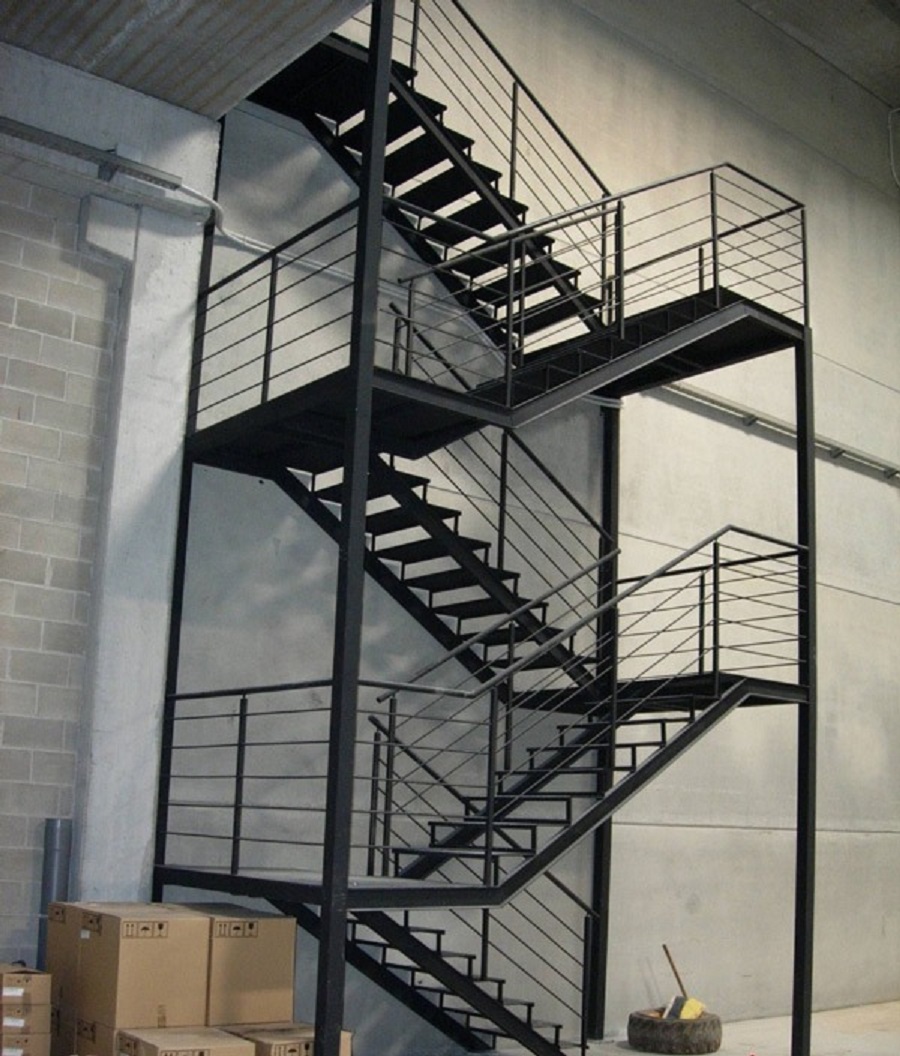
⏹️ 3. Staircases with Landings – Safe and Comfortable for Multi-Story Buildings
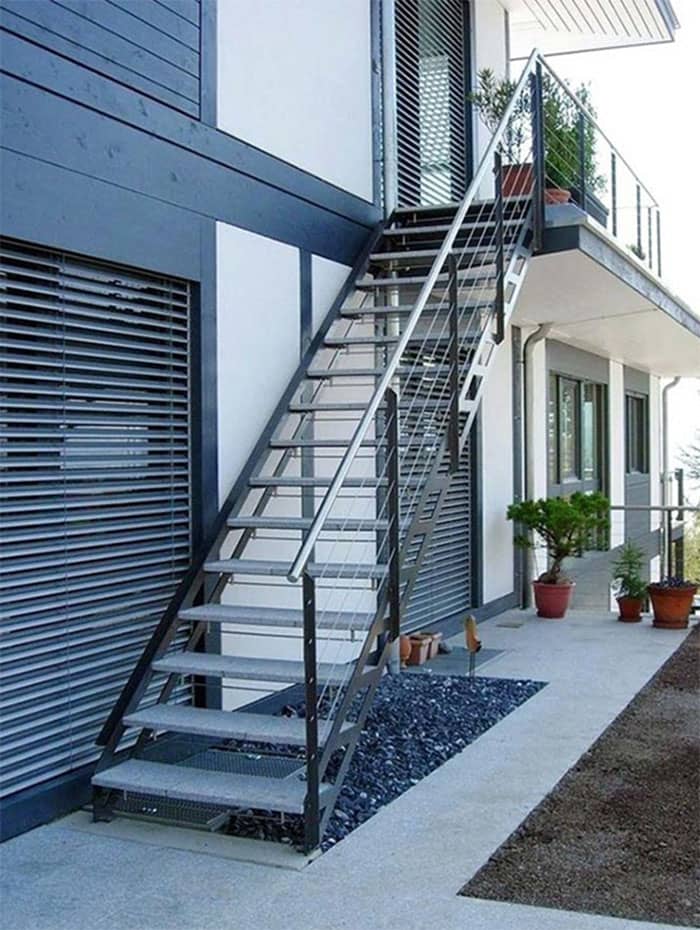
🔹 Features:
-
Includes intermediate landings between flights (each segment typically under 3m)
-
A common choice in large manufacturing plants
✅ Advantages:
-
Enhances safety and reduces fatigue during use
-
Allows easy transport of goods by hand or trolley
-
Can integrate double handrails and better anti-slip design
⚠️ Notes:
-
Occupies more floor space
-
Requires careful layout planning to ensure smooth circulation
📌 Suitable for:
Multi-story factories, production areas with frequent worker movement, main escape routes
📐 So, which type of staircase is best for your factory?
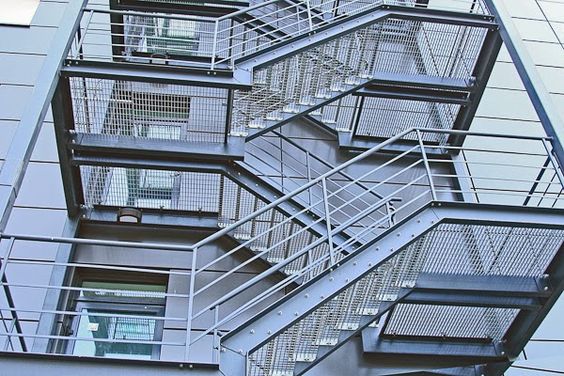
The answer depends on:
✅ Floor height:
- Under 3.5m: A simple straight staircase works well
- Above 3.5m: Choose a staircase with landings for safety
✅ Usage frequency:
- Main circulation staircase → Prefer staircases with landings
- Secondary technical staircase → Spiral stairs can be suitable
✅ Floor area:
- Limited space → Opt for spiral stairs
- Spacious layout → Flexible to choose based on function
✅ Goods transportation requirements:
- If trolleys or heavy manual lifting are involved → Staircases with wide landings are the safest choice
🏗️ CMC Architects – Experts in Designing Industrial Steel Staircases That Prioritize Safety and Space Efficiency
With dozens of factory and industrial projects nationwide, CMC Architects has extensive experience in:
- Designing durable steel staircases
- Coordinating seamlessly between architecture – engineering – safety standards
- Selecting the right solutions based on budget – functionality – project scale
🎯 Every stair design not only ensures accessibility – but also optimizes space and operational costs throughout the building’s lifecycle.
💬 Are you planning to build a new factory or upgrade your steel structure?
- Not sure which staircase type best fits your needs?
- Worried about fabrication costs and durability?
- Looking for a clear, easy-to-build design that meets safety standards?
📩 Leave your information at cmcarchitects.com – or contact us directly for free consultation from our industrial staircase experts.
📣
✅ Download our free guide: “Comparison of Steel Staircase Types for Industrial Projects – Pros, Cons & Selection Tips”
✅ Share this article with engineers, investors, and factory owners
✅ Register for a 1:1 consultation with CMC Architects – where your drawings turn into real, safe, and optimized solutions