In modern apartment buildings, stair railings are not just auxiliary elements but also crucial details directly related to user safety, structural durability, and architectural finish quality. Especially in basement areas, where high demands are placed on structure, installation space, and precise construction capabilities, the technical drawings need to be clear, complete, and highly practical.
At CMC Architects Vietnam, we always consider each drawing a vital part of the process of transforming design ideas into a finished construction product. For the new 1-chome apartment building project in Higashi-Yukigaya, Ota Ward, CMC Architects Vietnam participated in developing the drawings for the basement stair railing, including floor plans, elevations, sections, and technical connection details.
A high-quality set of stair railing drawings not only helps the construction team understand the design correctly, but also assists the manufacturing workshop in accurately fabricating every detail such as handrails, risers, base plates, bolts, connection points, and installation heights. This is the foundation for a safer, more consistent, and professional construction project.
The Role of Basement Staircase Railing Drawings
Stair railings are a frequently used element in any building. For basement areas, the railing system needs to meet multiple requirements simultaneously: safety, sturdiness, load-bearing capacity, compatibility with the existing structure, and harmony with the overall architectural space.
If the drawings are not clear enough, construction can easily encounter problems such as incorrect handrail height, misaligned posts, mismatched anchor points, incorrect vertical spacing, or on-site adjustments. These seemingly minor errors can significantly impact the progress, cost, and quality of the finished product.
Therefore, basement stair railing drawings need to be comprehensively presented from multiple perspectives: from floor plans to determine the overall location, elevations to control shape and height, cross-sections to clarify the structure, to detailed technical specifications for accurate fabrication and installation.
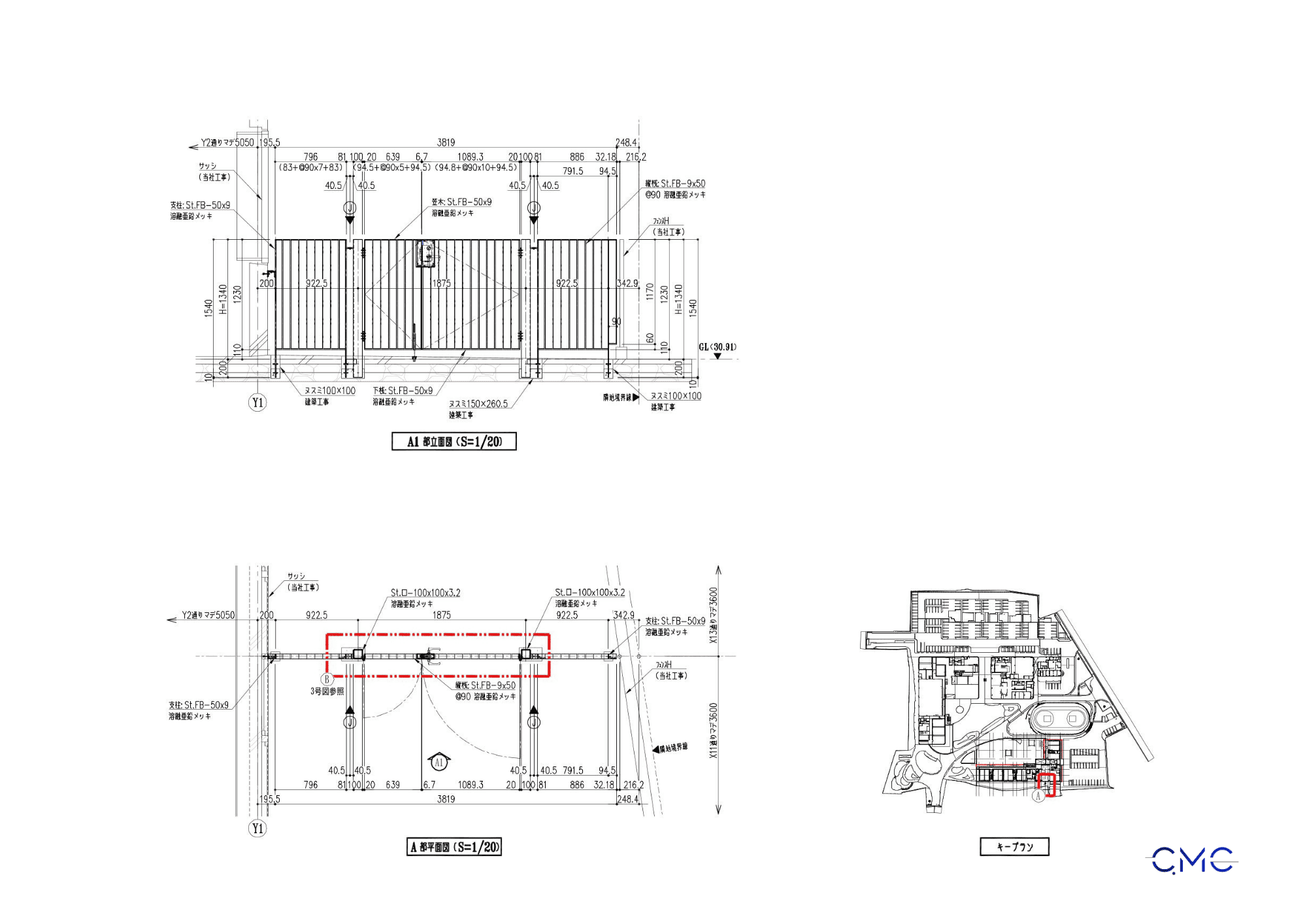
Floor Plan: Accurately Determine the Railing Installation Location
The floor plan is the first step in helping stakeholders visualize the installation location of the handrails within the overall staircase space. For the 1-chome apartment project in Higashi-Yukigaya, Ota Ward, the floor plan clearly shows the basement staircase area, the direction of movement, the position of the handrail sections, the alignment axis, and their relationship to the surrounding structure.
This is a crucial basis for checking whether the handrails are correctly positioned, whether the distance between connection points is appropriate, and whether the handrail sections fit the actual space.
With a clearly presented floor plan, the construction team can easily compare the drawing with the site. Simultaneously, the manufacturing workshop can use it to determine the length of each section, the module division location, and the appropriate fabrication method.

The floor plan of the basement staircase railing shows the installation location, alignment axis, and scope of implementation within the building
Elevation: Controlling the Shape, Height, and Proportions of the Balustrade
While floor plans help determine the location, elevations help control the final shape of the railing. This is a crucial part of stair railing drawings, as it clearly shows the handrail height, slope according to the steps, position of the vertical bars, spacing of the components, and the continuity of the railing system.
For basement staircases, elevations also help check the relationship between the railing and the steps, floor slab, walls, and surrounding structures. This helps prevent situations where the railing is only discovered during construction if it is obstructed, misaligned, or not at the correct height according to the design.
In CMC Architects Vietnam's drawing set, the elevations are clearly detailed, showing all the necessary dimensions and heights. This allows the construction team to visualize the finished railing's shape, and provides the workshop with a basis for fabricating to the correct scale and technical specifications

Elevation view of the basement staircase railing, showing the handrail height, stair slope, and arrangement of the main components
Additional Elevation: Ensuring Consistency Between Balustrade Areas
For projects with multiple railing sections, showing only one elevation is insufficient. Additional elevations help monitor each railing section at different locations, especially at transition points, floor junctions, or areas with varying structural configurations.
In this project, the additional elevation drawings clarify how the railing connects to the floor, walls, and staircase. Information such as height, spacing, anchor points, and connection locations are presented in detail to minimize errors during construction.
This is a crucial step to ensure the entire railing system is not only technically correct but also aesthetically pleasing upon completion. A beautiful railing system is not just about the materials or paint color, but also about alignment, balance, and precision in every installation detail
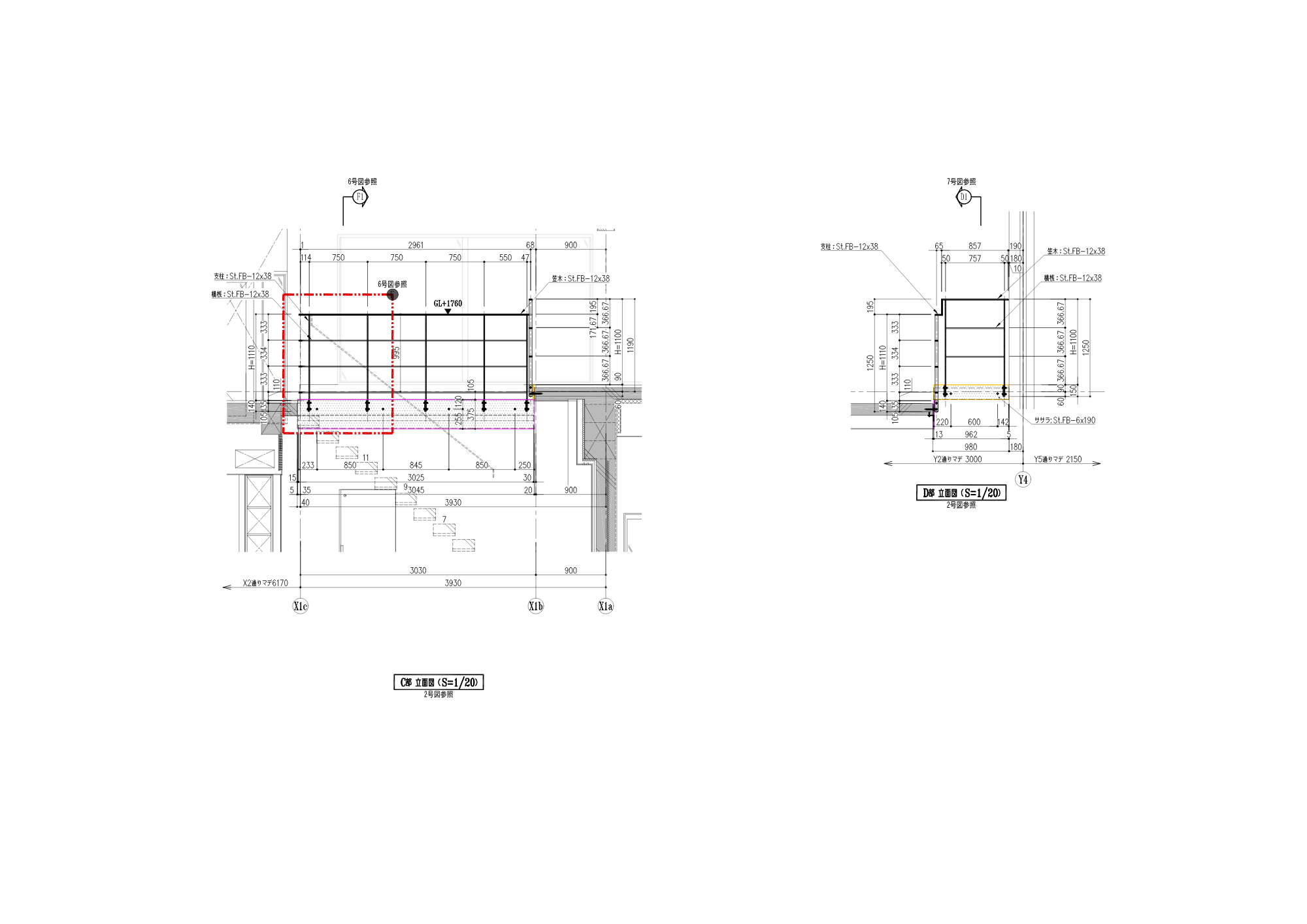
The additional elevation view of the railing system helps control the height, connection position, and consistency between the railing sections
Technical Details: The Basis for Precise Machining and Assembly
In stair railing drawings, the technical details directly impact construction quality. This is where information such as handrail dimensions, risers, base plates, bolts, hole drilling locations, connection spacing, materials, and methods of securing the structure are clearly shown.
Even small details like bolt hole locations or base plate dimensions, if not accurately represented, can cause installation difficulties. The construction team may have to drill, rework, or adjust on-site, wasting time and impacting the schedule.
With experience in developing 2D AutoCAD drawings, CMC Architects Vietnam always prioritizes presenting details in a way that is easy to read, understand, and directly applicable to production. Every dimension line, material note, and connection symbol is carefully controlled to best serve the actual construction process

Technical details of the stair railing, showing the structure of the handrail, vertical bars, base plates, and connection points
Sections and Connection Details: Clarifying How the Railing Attaches to the Structure
Sections and connection details are an indispensable part of basement stair railing drawings. While floor plans and elevations show the location and shape, sections clarify how the railing is attached to the floor, walls, or surrounding steel structure.
This section helps the construction team answer crucial questions: where is the railing anchored, where are the base plates placed, how are the bolts used, what is the distance from the floor edge to the connection point, and is the installation method suitable for the actual conditions?
A complete set of drawings with sections and connection details will significantly reduce on-site risks. Instead of relying on on-site experience, the construction team can use the drawings to ensure correct execution from the start
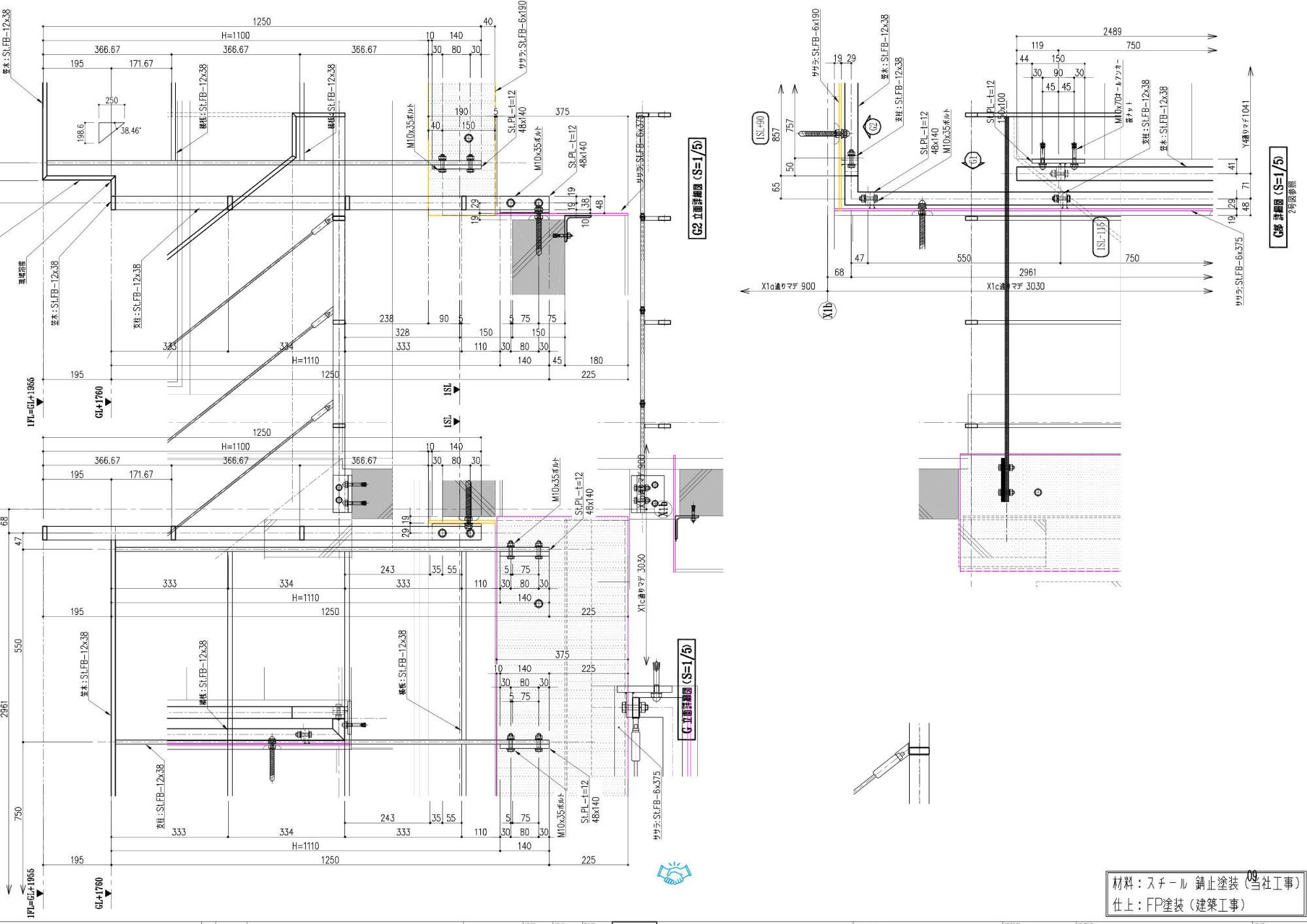
Cross-sections and details of the railing connections clarify the method of fixing them to the floor, walls, and related structural elements
The Value of Professional Staircase Railing Designs
A professionally produced set of stair railing drawings offers many practical benefits to a project.
First, clear drawings reduce errors during production and construction. When dimensions, materials, elevations, and connection points are fully shown, all parties involved can work together more effectively.
Secondly, detailed drawings save time on checking and communication. The construction team doesn't need to spend excessive time asking for clarification or resolving unclear points on site.
Furthermore, accurate drawings help control the quality of the finished product. Each section of the railing, handrail, riser, and connection point is shown consistently, resulting in a sturdy, neat, and professional-looking finished structure.
Most importantly, a good set of drawings increases trust between the investor, the design firm, the manufacturer, and the construction team. When everyone works together on a clear technical documentation system, the project implementation process will be more transparent, efficient, and less risky
CMC Architects Vietnam – Partnering in Steel Structure Design
CMC Architects Vietnam specializes in developing technical drawings for architectural steel and metal elements such as railings, handrails, steel staircases, ladders, steel floors, panels, louvers, door frames, and auxiliary connecting details.
With our proficiency in AutoCAD 2D, strong technical control, and experience in real-world construction projects, we always aim to create easily readable, accurate, and highly applicable drawings.
For the basement staircase railing project at 1-chome, Higashi-Yukigaya, Ota Ward, CMC Architects Vietnam focused on fully representing all important elements: floor plans, elevations, sections, connection details, materials, and construction dimensions.
We believe that good drawings not only ensure the correct construction but also contribute to improving the quality of management, production, and installation throughout the entire construction process.
Conclude
The basement stair railing drawings are a crucial part of the technical documentation for an apartment building project. When fully developed, clear, and accurate, these drawings facilitate the manufacturing, fabrication, and installation process, reducing errors, saving time, and improving the quality of the finished product.
The 1-chome apartment project in Higashi-Yukigaya, Ota Ward, is an example demonstrating the importance of technical drawings in controlling every small detail of the construction.
What do you think is the most important element in a set of stair railing drawings: clear floor plans, accurate elevations, complete cross-sections, or easily compliant connection details? Share your perspective so that CMC Architects Vietnam can discuss further how to create more professional and effective drawings.
Contact Information
CMC Architects Vietnam
Website: https://www.cmcarchitects.com/
Hotline: 09.3636.1299